©

Massimo Municchi

Château Gombert district

Located in the 13th arrondissement, north-east of Marseille, bordering the town of Plan de Cuques, Casteu-Gombèrt or Casteau-Goumbert, as the ancients say, has kept its authentic Provençal village soul. Here, most people know each other and families of several generations are living side by side, because it is a great place to live!

The history of Château Gombert

In 1829, the caves Loubières (les grottes Loubières), were discovered and archaeological digs brought to light tools and everyday objects dating from the Bronze and Iron Ages, as well as the Roman period.

It was only in the 12th century that religious documents were found attesting to the existence of the village of Chateau Gombert around a medieval castle and a church. The castle belonged to the Gombert family, from a Provençal nobility. There are no vestiges dating from this time, the wars of the 16th century having ravaged the countryside. It was only after that the new hamlet was built in the current location, surrounded by bastides. At that time, Château Gombert was an agricultural village which depended on the seigneury of Allauch. It was not until 1595 that it became part of Marseille for tax reasons. Until then, farmers wishing to trade with Marseille had to pay a tithe. In 1930, Château Gombert like its neighbours Allauch and Cuques, dreamed of independence, but the 2nd World War put a definitive end to their claims. Even 30 years ago, a hundred farmers were still working their agricultural land, but today they have given way to technology parks and new buildings.

Urban development

The Château Gombert district has undergone several waves of construction, we clearly distinguish two areas: the historic area and the Technopole Marseille Provence.

The historic area of the Château Gombert district

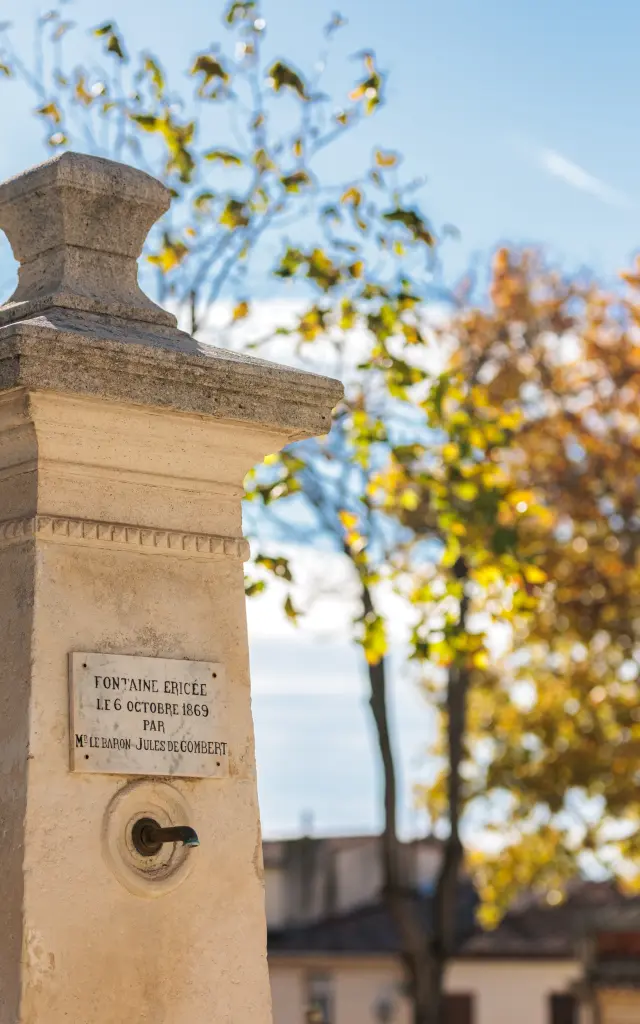
Easy to locate thanks to the square tower of the Musée provençal that stands proudly, it is the heart of the district, where people like to meet. On the place des Héros, with its colourful facedes, children meet after school to play around the fountain while parents chat (fountain designed by architect of the city Henri Jacques Espérandieu, and erected in 1869 by Baron Jules de Gombert during the construction of the Marseille canal to supply the village with drinking water). The square is also home to the Musée Provençal and the church of Saint Mathieu, whose bell tower provides a cheerful rhythm to the day. People meet at the farmers’ market which takes place every Friday late afternoon, and at the many shops that play a key role in village life.

The Technopole Marseille Provence Château Gombert

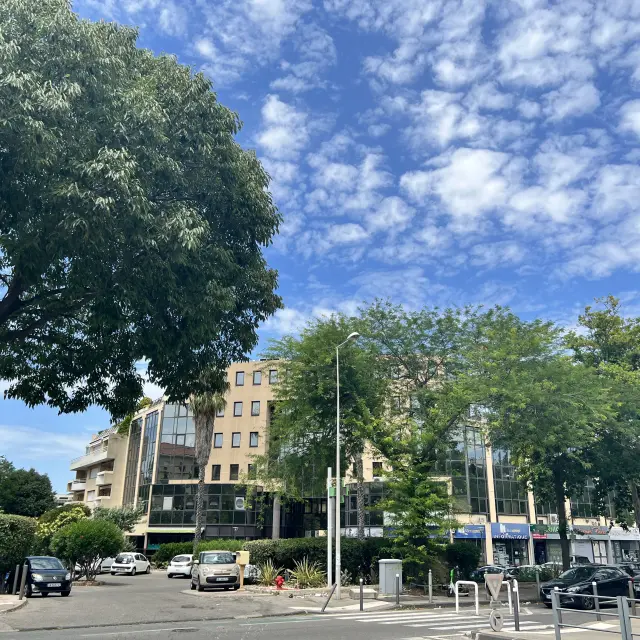
It was created under the aegis of Marseille Provence Métropole, in collaboration with the City of Marseille, the General Council 13 and the Regional Council. The Technopole is a place dedicated to training, innovation and research. French research centre in mechanical-energy after Paris, it is endowed with two major engineering schools: Centrale Marseille and Polytech Marseille, 170 companies of which 50 start-up, 8 laboratoiries, 15 technological platforms…but also a residential park of housing, student residences, shops and all the services of everyday life.

To discover, the parc Athéna, which has vast areas of greenery, games for children but also a skate-park course fields. There are also the remains of a green theater, faithful replica of the ancient theater Athéna-Niké located on the Acropolis of Athens. Built by Jean Boet, it welcomed the greatest performers from 1908 to 1914. Today the ASSENEMCE (Association for Safeguarding Sites and Environment in the North-East of Marseille and Chaîne de l’Etoile) and the CIQ are fighting for its rehabilitation.

The Massif de l’Étoile, the district’s green lung

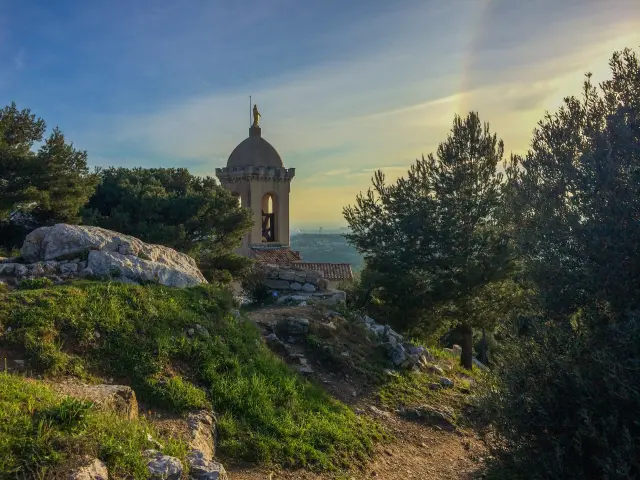
Château Gombert is one of the 18 communes crossed by the massif de l’Etoile. Wherever you are, just look up and you’ll see “le Pic de l’Etoile”, one of the symbols of the village! This is in fact the summit of Grande Etoile rising to 590m, and home to one of town’s two television transmitters. So, at the end of the day or on weekends, it’s easy for local residents to go hiking or mountain biking on the many footpaths from La Parade, Palama or the park départemental de la Nègre.

Provencal traditions

As you can see, Provençal traditions are deeply rooted in the heart of the people of Château Gombert which punctuate their life. One man played a key role in this quest: Jean Baptiste Julien PIGNOL, founder of the Centre Culturel Provençal “le Roudelet Felibren” and the Musée Provençal.

The Roudelet Felibren

Created in 1927, the Roudelet Felibren aims to perpetuate and promote Provençal traditions in the village. It offers workshops in dance, music, choir, sewing and provençal language. 

The cultural centre is also at the initiative of the creation of the International Folklore Festival of Château Gombert in 1965. It has since gained a certain reputation by hosting folk dance from all over the world.

The Musée Provençal

Founded in 1928, it was first named Musée d’Art Provençal then Musée des Arts et Traditions Populaires du Terroir Marseillais, and finally renamed Musée Provençal. This private museum has been enriched over the years thanks to donations from local residents. It retraces the life of Provence in the past with all kinds of everyday objects. Thus, it consists of several rooms: The Provençal kitchen, the bourgeois bedroom, the dining room, the Renaissance room, as well as rooms devoted to santons, toys, costumes and textiles, books…

Today, the museum is also an events venue, with a reception room for rent and an open-air theater where music concerts are held on summer evenings.

The Saint Eloi Group of Château Gombert

Founded 150 years ago, it is one of the oldest maintainers of Provençal traditions in Marseille, organizing the Saint Eloi Festival, the Recampado and the cattle fair.

 Rendez-vous!

  • January : the Pastorale Maurel, a play telling the story of the birth of Jesus, played entirely in provencal at the cultural center of Provence.
  • Spring : the Recampado, day of walk in the hills of Château-Gombert. Departure from the village with donkeys and carts pulled by horses, to the sound of fiftres and tambourines, then arrived at the massid de l’étoile: aperitif, picnic, games for children, dances…
  • Commémoration of May 8, 1945 at the memorial in Place des Héros
  • Ascension Thursday : The Cattle Fair. You’ll meet the farrier, poultry sellers, maquignons (horse traders) and traditional Provençal musicians. There’s also a refreshment stand and children’s games.
  • Last weekend of June : the Saint Eloi Festival. Further information: link to the homepage Saint Eloi Festival website.
  • Early July : The Château Gombert International Folklore Festival at the Château Gombert cultural center. Every evening, for 10 days, dinner dances are organized to discover folk dances from all over the world. ( Peru, Colombia, Brazil…)
  • Flea market : twice a year – spring/autumn at the boulodrome, information available from the CIQ.
  • Local organic or sustainable farmer’s market : every Friday from 3 pm to 6 pm in winter, and from 4 pm to 8 pm in summer, in Place des Héros.