The Fanal Tower

A lookout at the entrance to the Old Port

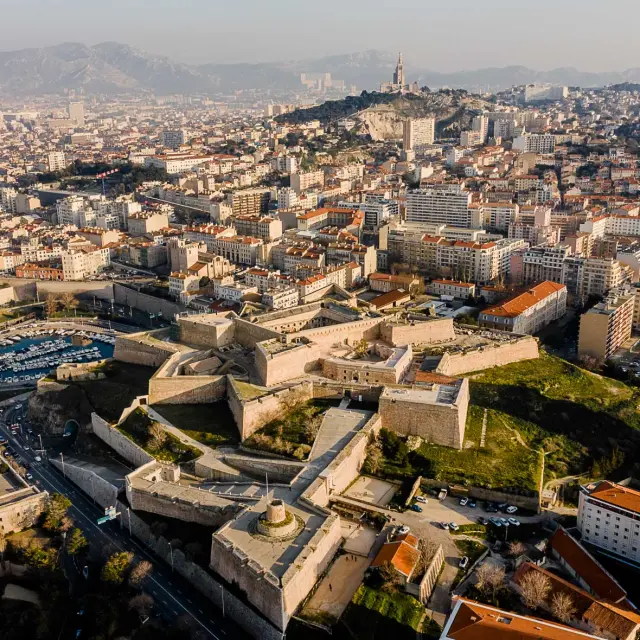
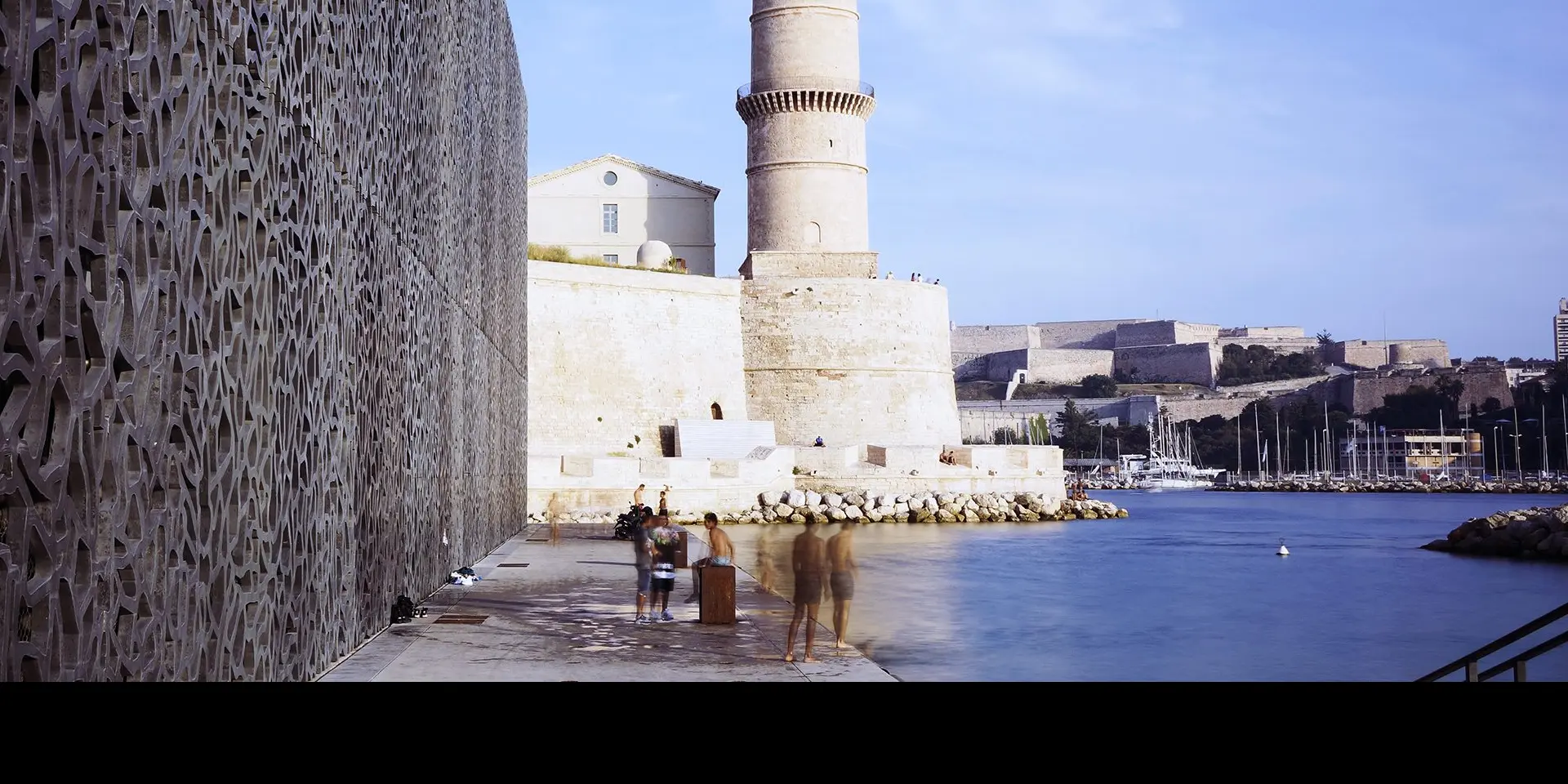
Overlooking the entrance to the Old Port, the Fanal Tower is one of Fort Saint-Jean’s most iconic landmarks. Built in the 17th century to guide ships into the harbour, this former watchtower has stood guard over the entrance to the harbour for several centuries. Discover the history of this little-known tower, a testament to Marseille’s rich maritime past.

A tower built to guide ships

In the 17th century, Marseille was one of the principal trading ports of the Kingdom of France. Every day, numerous ships entered and left the harbour, making navigation difficult, particularly at night or in foggy conditions. To ensure the safe arrival of ships and protect the goods they carried, Marseille’s shipowners commissioned the construction of a tower designed to guide sailors to the entrance to the Lacydon cove.
Lights were then installed at its summit to make it easier to spot the port. The very name of the tower recalls this original function: the word ‘fanal’ comes from the Ancient Greek phanós, meaning ‘lantern’.
The Fanal Tower, a remarkable structure

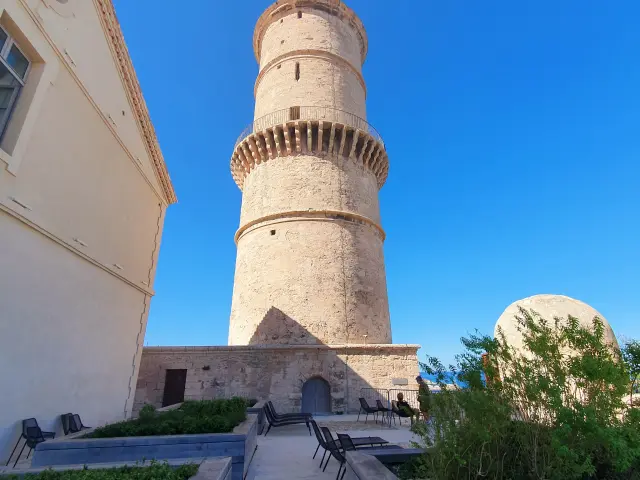
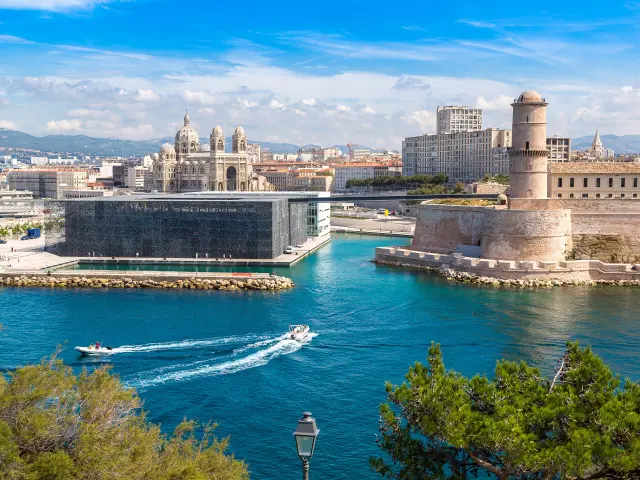
Built on a square plinth, the Fanal Tower stands 30 metres tall and rises some 50 metres above sea level. The few people authorised to visit it are treated to an exceptional 360° panoramic view of Marseille.
Construction began on 22 March 1644 under the supervision of three master masons: Bœuf, Gay and Alluys. Built from solid ashlar stones transported by boat to the site, the tower features a unique double-cylinder design.
Halfway up, a continuous balcony rests on false machicolations, whilst a spiral staircase of 132 steps leads to the summit. Lit by a few loopholes, it reinforces the building’s military character. The tower is crowned by a stone dome, which gives it its distinctive silhouette. From 1980 onwards, major restoration work restored the Fanal Tower to its former glory. Today, it is one of the major architectural features of Fort Saint-Jean and the Mucem.

From watchtower to prison: an eventful history

For several centuries, the Fanal Tower fulfilled its role as a maritime beacon to the full. The lantern was lit when ships arrived, at night or when fog reduced visibility.
Two cannons, once installed at the foot of the tower, would fire a salute as ships entered the channel. In 1837, a fixed light was installed on a cylindrical masonry turret 5.75 metres high, situated at the foot of the round tower. This structure was raised in 1912 by means of a red pylon, bringing the light to a height of 7 metres.
During the French Revolution, Fort Saint-Jean was converted into a prison. The Fanal Tower was then fitted out with several small circular cells particularly suited to this new purpose. It remained in use as a place of detention until 1962. The interior walls still bear traces of this period today. Prisoners carved their prison timetables into the walls, produced numerous drawings (some of an erotic nature) and left a few rather unusual inscriptions.

Visiting the Fanal Tower

The Fanal Tower is not open to the public, but you can admire it up close during a visit to the Mucem. Fort Saint-Jean is, in fact, an integral part of the Museum of European and Mediterranean Civilisations (Mucem). You can access the Mucem terrace free of charge; we invite you to climb the steps of the 28.5-metre-high square Tower of King René, where a breathtaking view of the harbour and the city awaits you. If you’d like to find out more, you can join our guided tour.