Rte Gineste With Bus

How do I get to the Calanques?

Access to the Calanques is regulated because this part of Marseille is unique and unspoilt. Find out all the conditions of access to the Calanques National Park, before taking advantage of its exceptional landscapes. A walk in the Calanques has to be earned! First of all, you’ll need to get to the start of the various access paths, which vary in ease, and then begin your descent to finally reach the various calanques. Don’t forget that this is a mid-range mountain range, so it’s best to be prepared and well equipped.

Reaching the gates of the Calanques

By public transport

If you come by public transport, you’ll need to plan to walk down to the Calanque you want. To do this, you’ll need hiking boots, plenty of water and, depending on the season, a hat and sunglasses.

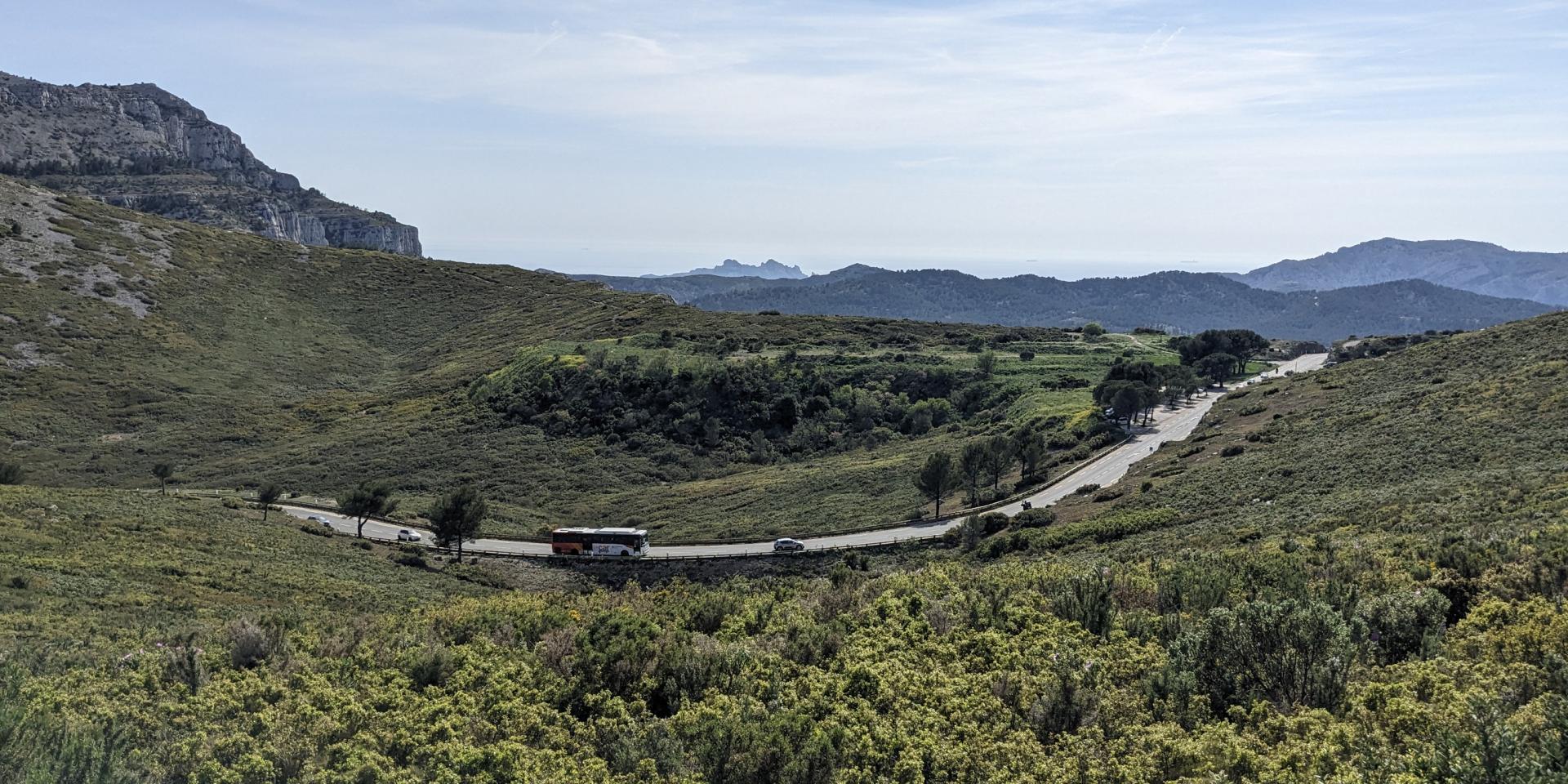
From Place Castellane (metro line 1 or 2 or tram line 3) – take bus no. 19 to the “Madrague de Montredon” terminus (the GR 98 starts here). Then change to bus no. 20, which ends at Callelongue.
From spring onwards, you can take a shuttle bus directly from Pointe-Rouge to Les Goudes.

From the Prado roundabout (metro line 2 towards Sainte-Marguerite – “Rond-point du Prado” stop) take bus no. 22 to the “Les Baumettes” stop. Then continue on foot to the Col des Baumettes and follow signs for the Calanque de Sormiou.

From the Prado roundabout (metro line 2 towards Sainte-Marguerite – “Rond-point du Prado” stop) take bus no. 22 to the “Les Baumettes” terminus. Continue on foot to the Parc des Baumettes and then follow the signs for Calanque de Morgiou.

From Place Castellane (metro lines 1 or 2 or tram line 3) or the Prado roundabout (metro line 2 towards Sainte Marguerite – stop at Rond-point du Prado) take bus B1 or 21 J to the “Luminy PN des Calanques” stop.

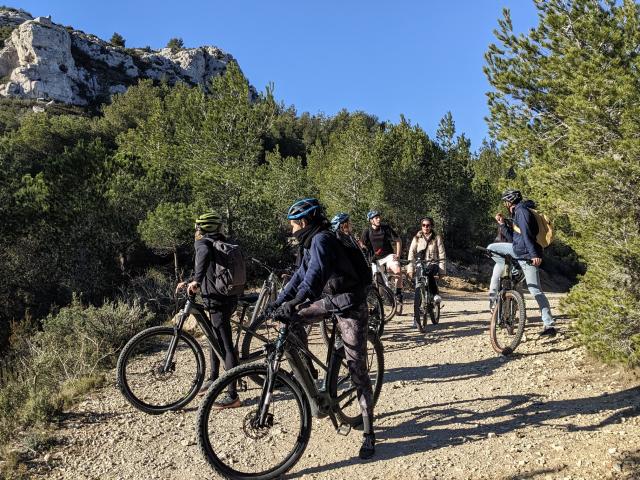
By bike

Since 2024, a number of measures have been taken to improve accessibility for active mobility.
Racks or systems for securing bicycles have been installed in various locations. These include

– At the Col de l’Oule, then continue on foot to the lookout point at En-Vau (large wooden log with a secure piton for attaching your bike)
– At Luminy (just before the start of the main path leading to the Col de Sugiton)
– All along the Chemin des Goudes between Samena, l’Escalette and Callelongue
– Along the GR 51-98 between the Port-Miou cove and the Port-Pin cove

New Vélo la Métropole stations have been installed to complete the offer, at :
– Luminy, at the “Luminy PN des Calanques” bus stop, just before the entrance to the science and technology park (the starting point for a large number of footpaths to Morgiou, Sugiton, Mont-Puget, etc.).
– At the start of boulevard Louis Pierotti (to explore the Jarre valley, climb to the dead man’s plateau and the western part of the Marseilleveyre massif…)
– La Madrague de Montredon and Samena (where you can then follow various GR paths to reach l’Escalette, les Goudes, Callelongue, the Béouveyre summit and, more generally, the eastern part of the Marseilleveyre massif).

By car

Only a few of the Calanques are accessible by car (and only at certain times of the year). It is advisable to get close to the massif by public transport, then to walk (even on foot, the massif is sometimes inaccessible!). Parking spaces are limited and traffic is heavy at certain times of year.

Please note that access to the Calanques massif (all the massifs in the Bouches-du-Rhône) is regulated by prefectoral decree.

Sormiou, Morgiou and Callelongue roads
Access for motorised vehicles is subject to a seasonal ban.
Each year, this restriction applies from the first weekend in April until the All Saints’ holiday.
The exact dates of closure and reopening are usually announced in March.

Calanque of Callelongue

You can take the Corniche Kennedy along the seafront and continue straight on through the village of Les Goudes. Keep going straight along this road and you’ll feel like you’re at the end of the world! And you’ll reach the Calanque de Callelongue. Parking spaces have been greatly reduced, and the traffic and congestion make access difficult. Public transport and active modes of transport are the best way to get to Les Goudes and Callelongue.

Calanque of Sormiou

You’ll need to go as far as the Cayolle district, where you’ll find a car park (although it’s not supervised and you’re advised not to leave anything lying around inside your car). The Calanque is only accessible by car out of season and subject to certain conditions.

Calanque of Morgiou

The Calanque is only accessible by car out of season and subject to certain conditions (see above). You will need to go to the Baumettes district, just after the prison (approximately 1 hour’s walk from the car park).

Calanque of Sugiton

The hiking trail starts near the Luminy campus in the 9th arrondissement, just past the Ecole Supérieure des Beaux-Arts et d’Architecture: the car park is in front. The walk takes around 1 hour.

For the past few years, access to the Calanque de Sugiton has been by prior arrangement only. (in high season)
Find out more.

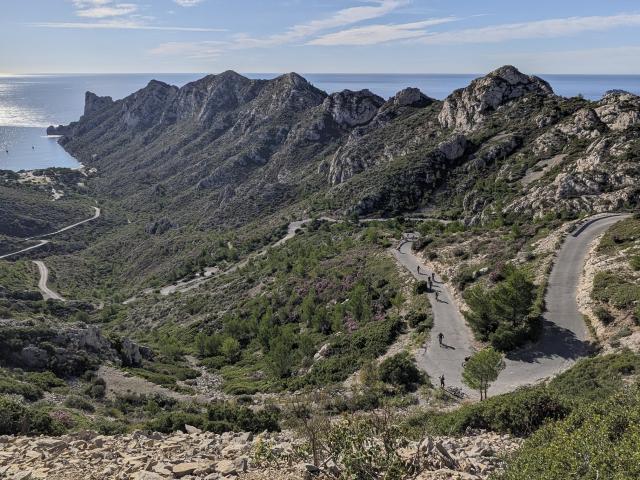
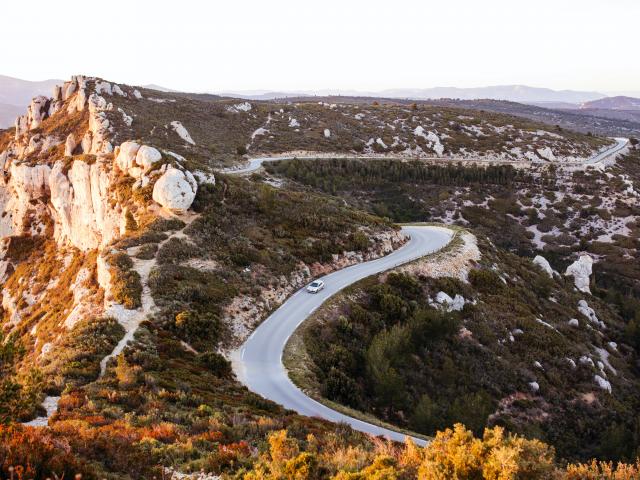
    Route des Crêtes between Cassis and La Ciotat

    Between 1 June and 30 September, on “red” days, the departmental road D141, known as the “route des crêtes”, is closed to motorised traffic (as are the other massifs in the department). This is also the case during extraordinary weather events.
    You can use the “mes calanques” mobile application to be warned in real time.

    The Route des Crêtes is reserved for pedestrians and alternative modes of transport every Sunday from the end of April to the end of September. This initiative, entitled “les Crêtes en pleine nature”, allows visitors to enjoy this emblematic site in complete peace and quiet.

    Visit the calanques

    to each his own!

    By boat

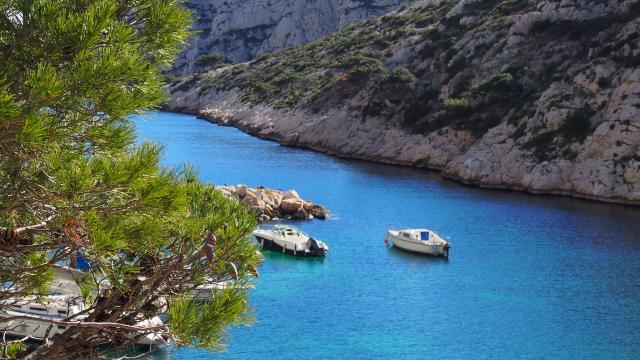
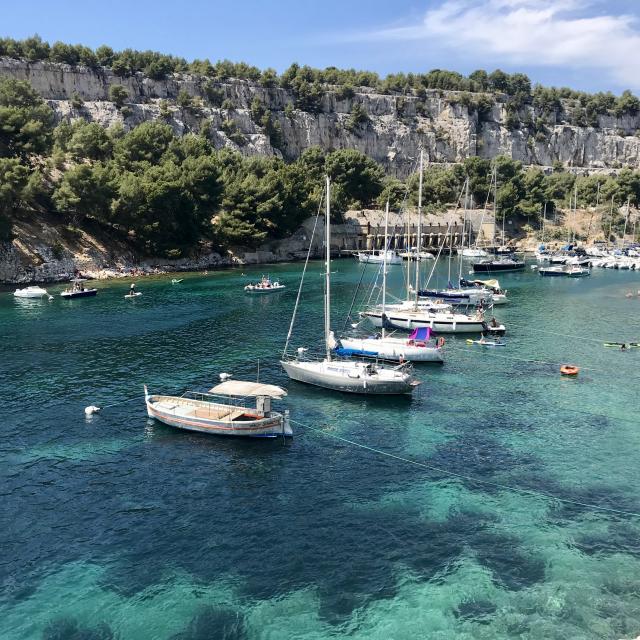
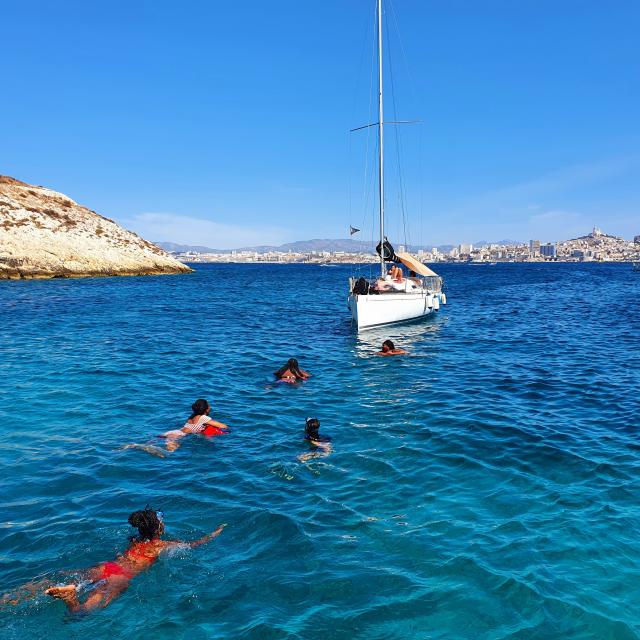
    You can visit the calanques by boat from the Old Port or the Pointe Rouge. There are several companies offering boat trips, all of which are licensed by the Calanques National Park. Cruise boats, canoes and kayaks, private motorboats – there’s something for everyone!

    Note that access by sea is also regulated, so if you want to go there on your own, it’s best to check with the Parc National des Calanques beforehand, and check the weather. The people of Marseilles know all about it: the mistral and the swell can come on suddenly!

    On foot

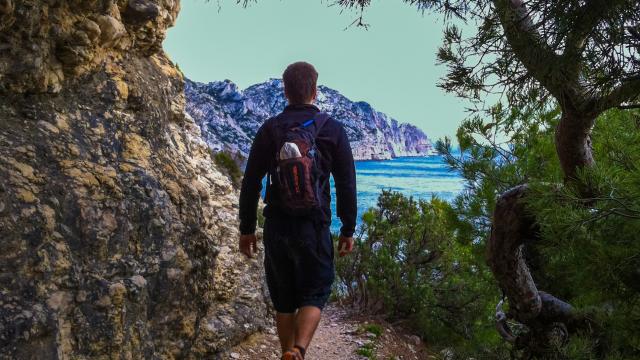
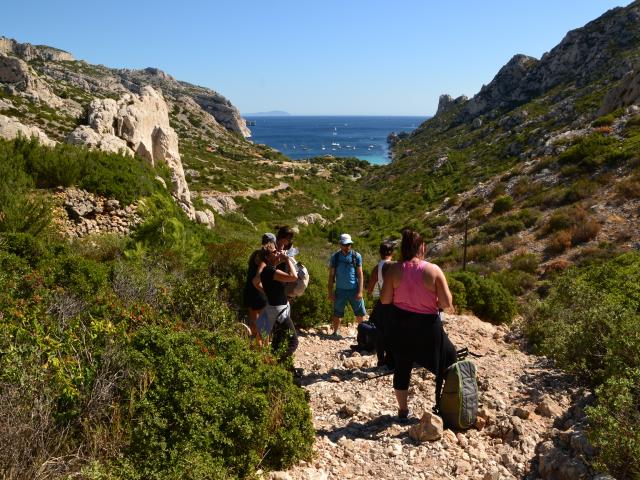
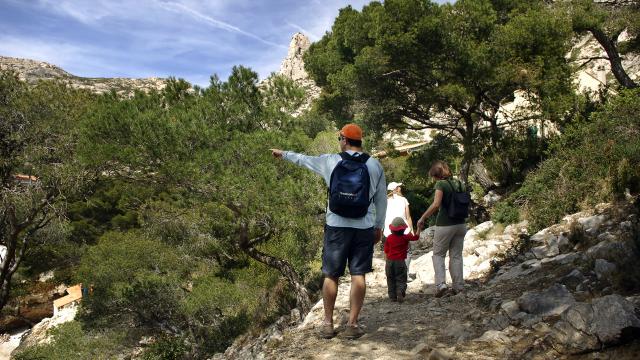
    You can, of course, discover Marseille’s calanques on foot, and enjoy some magnificent walks. There are many paths leading to the calanques, some steeper and more complicated than others. That’s why it’s so important to get the right information before you set off. From the Côte Bleue to the Parc National des Calanques, each of these sporting walks is more beautiful than the next.

    For some years now, the Calanque de Sugiton has been accessible only by reservation during the summer season.
    Book your access

    In the event of a “red” day, access to the massif is totally forbidden, even on foot.

    Subscribe to our newsletter

    Stay connected and find out all the latest news from Marseille