Regulations on land
The Parc National des Calanques is open from 1 October to 31 May, unless it is closed in exceptional circumstances. From 1 June to 30 September, access to the massif is regulated by order of the Prefecture due to the high risk of fire. Before coming, it’s best to find out about the conditions from the Bouches-du-Rhône Prefecture. A map is posted online daily by the Prefecture, and you can call 0811 20 13 13 or download the “Mes Calanques” application. The map is colour-coded to show which areas are authorised for visitors. Green, yellow (authorised traffic), red (access prohibited).
Access roads to the calanques
The Gardiole, Morgiou, Sormiou and Callelongue roads have additional regulations. The Gardiole and Cap Croisette roads are closed to motorised traffic all year round.
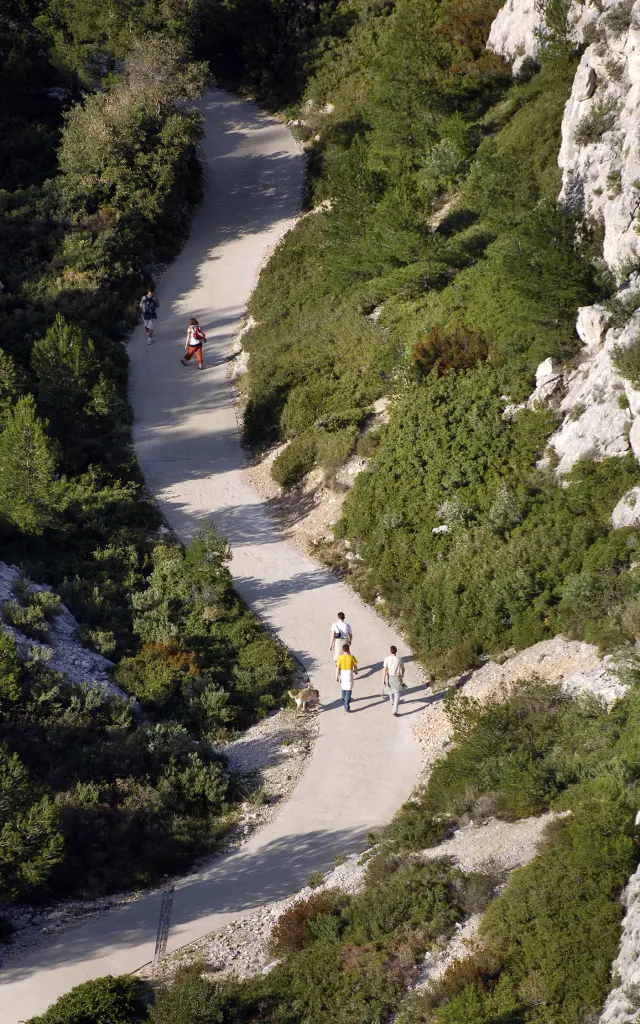
Pedestrian access to these roads is permitted under certain conditions.
Motorised access is subject to a seasonal ban.
Morgiou:
Friday 5, Saturday 6 and Sunday 7 June: from 7:00 a.m. to 7:00 p.m.
From Friday 12 June to Sunday 30 August inclusive: every day from 7:00 a.m. to 7:00 p.m.
From Monday 31 August to Sunday 27 September inclusive: every Saturday and Sunday from 7:00 a.m. to 7:00 p.m.
Sormiou:
Friday 5, Saturday 6 and Sunday 7 June: from 7:00 a.m. to 7:00 p.m.
From Friday 12 June to Sunday 30 August inclusive: every day from 7:00 a.m. to 7:00 p.m.
From Monday 31 August to Sunday 27 September inclusive: every Saturday and Sunday from 7:00 a.m. to 7:00 p.m.
Callelongue:
Friday 5, Saturday 6 and Sunday 7 June: from 7:00 a.m. to 7:00 p.m.
From Friday 12 June to Sunday 30 August inclusive: every day from 7:00 a.m. to 7:00 p.m.
Warning!
Access to the Calanques Massif (and all massifs in the Bouches-du-Rhône department) is regulated by a prefectural order.
On days when the forest fire risk is at ‘red’ level, access is prohibited 24 hours a day.
.
Find out all the rules governing access to the Parc National des Calanques
Before setting off on a hike in the Calanques
To make the most of your outing, good preparation is essential.
Make sure you have :
- a map of the Parc des Calanques,
- good walking shoes
- sunglasses and a hat,
- At least 1.5 litres of water per person,
- A charged mobile phone,
- a first-aid kit.
- If you are going on your own, always tell someone about your itinerary and departure time.
⚠️ Beware: some trails are demanding and sometimes steep. Take the time to prepare well, especially if you’re walking with young children.