




1Concrete walls lining the track towards the viewpoint
As well as the platform at the end of the fire road, these are remains dating back to world war II. These structures were built by the Third Reich's armies to establish strategic observation points along the coast, with the aim of anticipating and countering a possible Allied amphibious invasion.
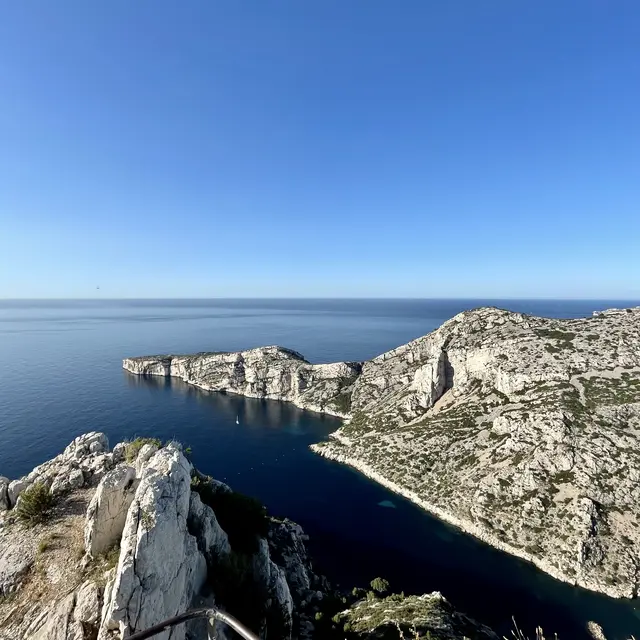
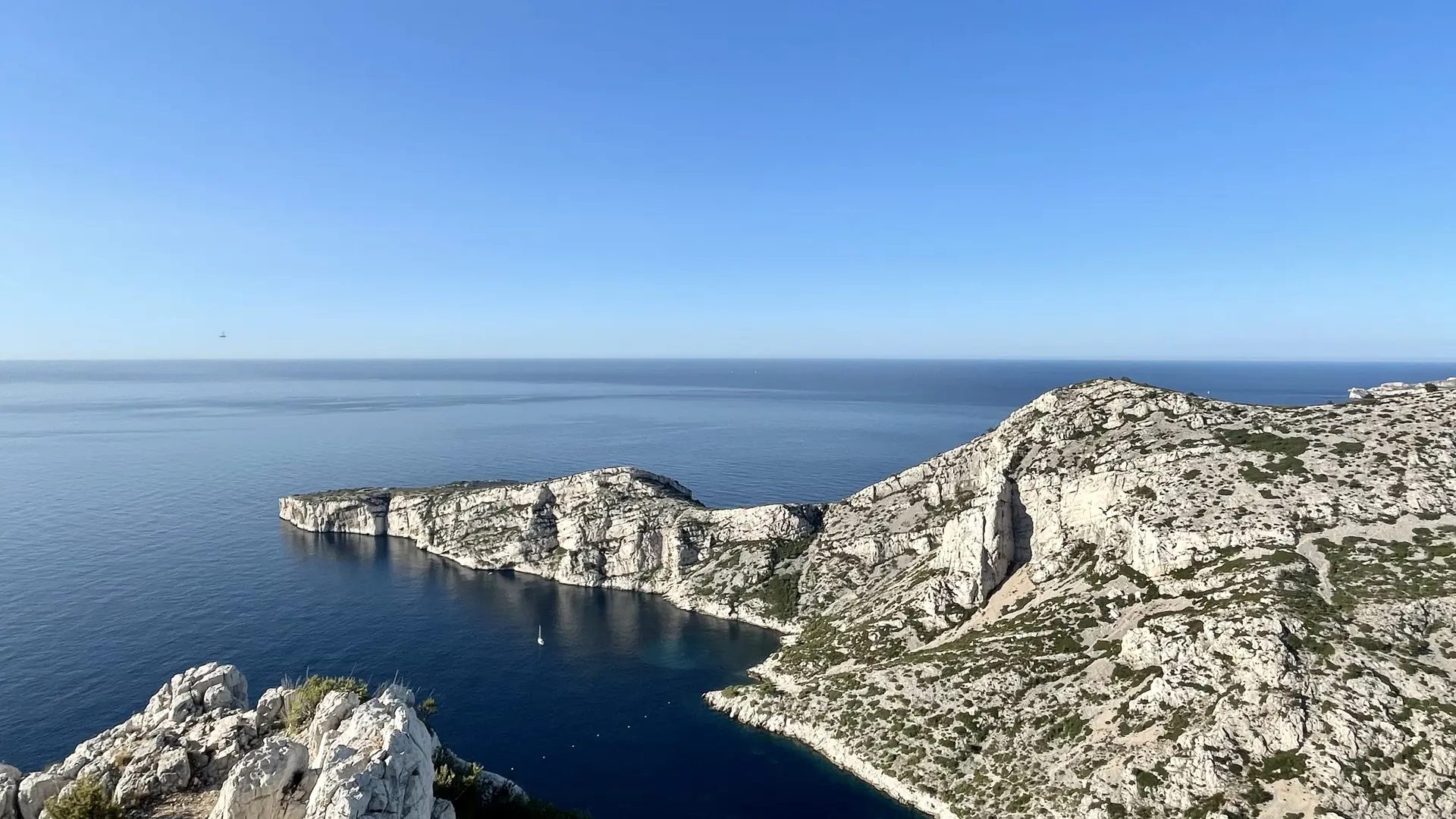
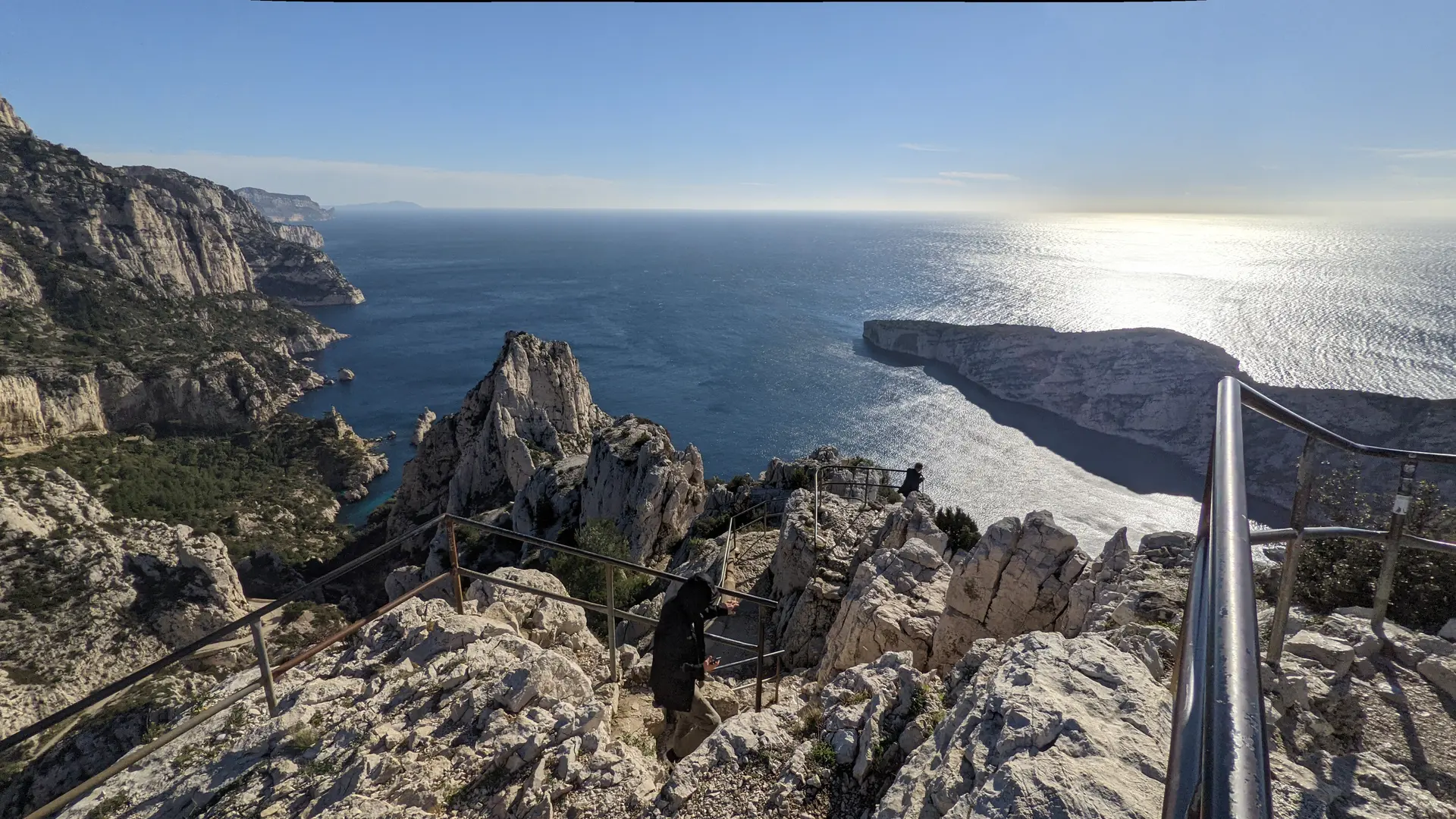
2Panoramic viewpoint
An exceptional panorama in the heart of the Calanques
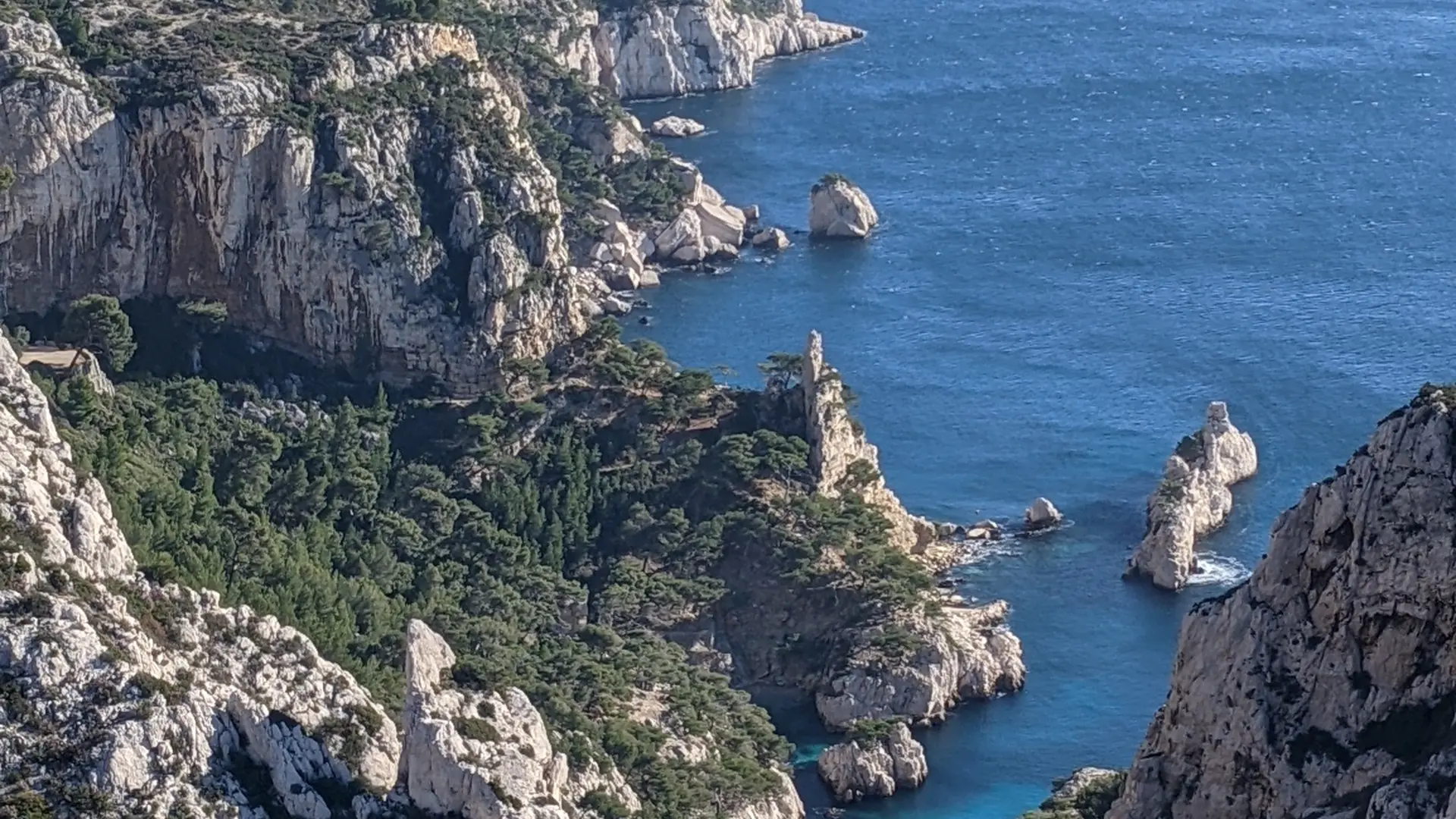
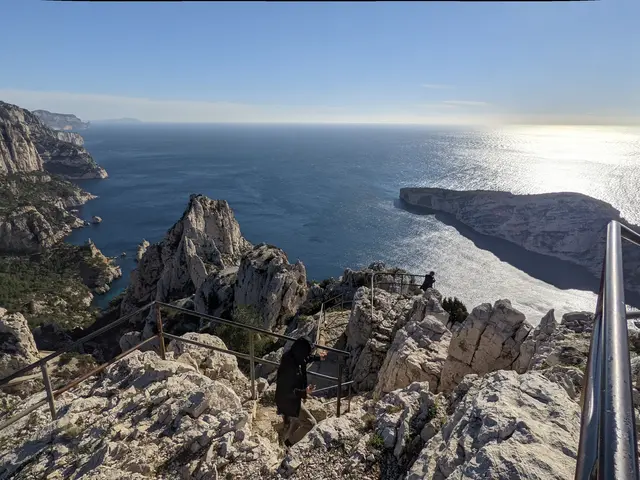
The Sugiton lookout occupies the site of a former military lookout, chosen for the uninterrupted view it affords of the coast and horizon. Also known as the ‘Orient Tower’, the name Sugiton comes from the Latin saxum, meaning ‘rock’ or ‘isolated rock’. Perched at an altitude of 245 metres, this viewpoint reveals the very essence of the Calanques National Park: a mountainous landscape plunging into the sea.
Facing the sea, Mont Puget dominates on the left. It is the highest peak in the Calanques massif. On the coast, you can proudly make out Grande Candelle and the Devenson cliffs, while Cap Canaille, Les Embiez and even Cap Sicié can be seen on the horizon on a clear day. Not far away, the islet of the Torpilleur marks the entrance to the Sugiton cove. To the right, the Morgiou cove spreads out as if seen from the sky, while the Marseilleveyre massif, Ile Maïre and the Riou archipelago stand out in the distance against a grandiose backdrop.
3
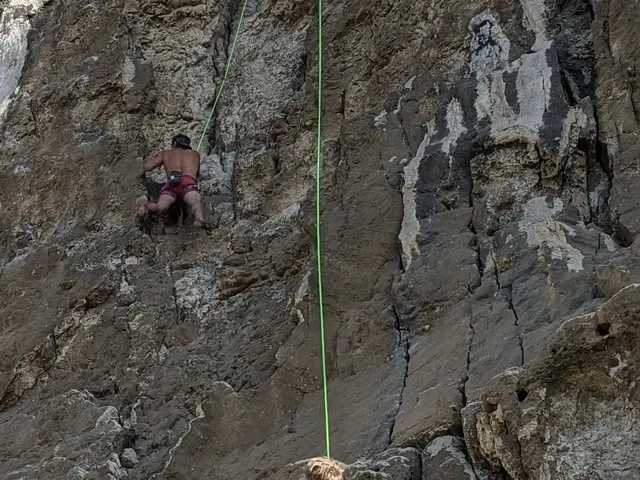
4Roof cliff
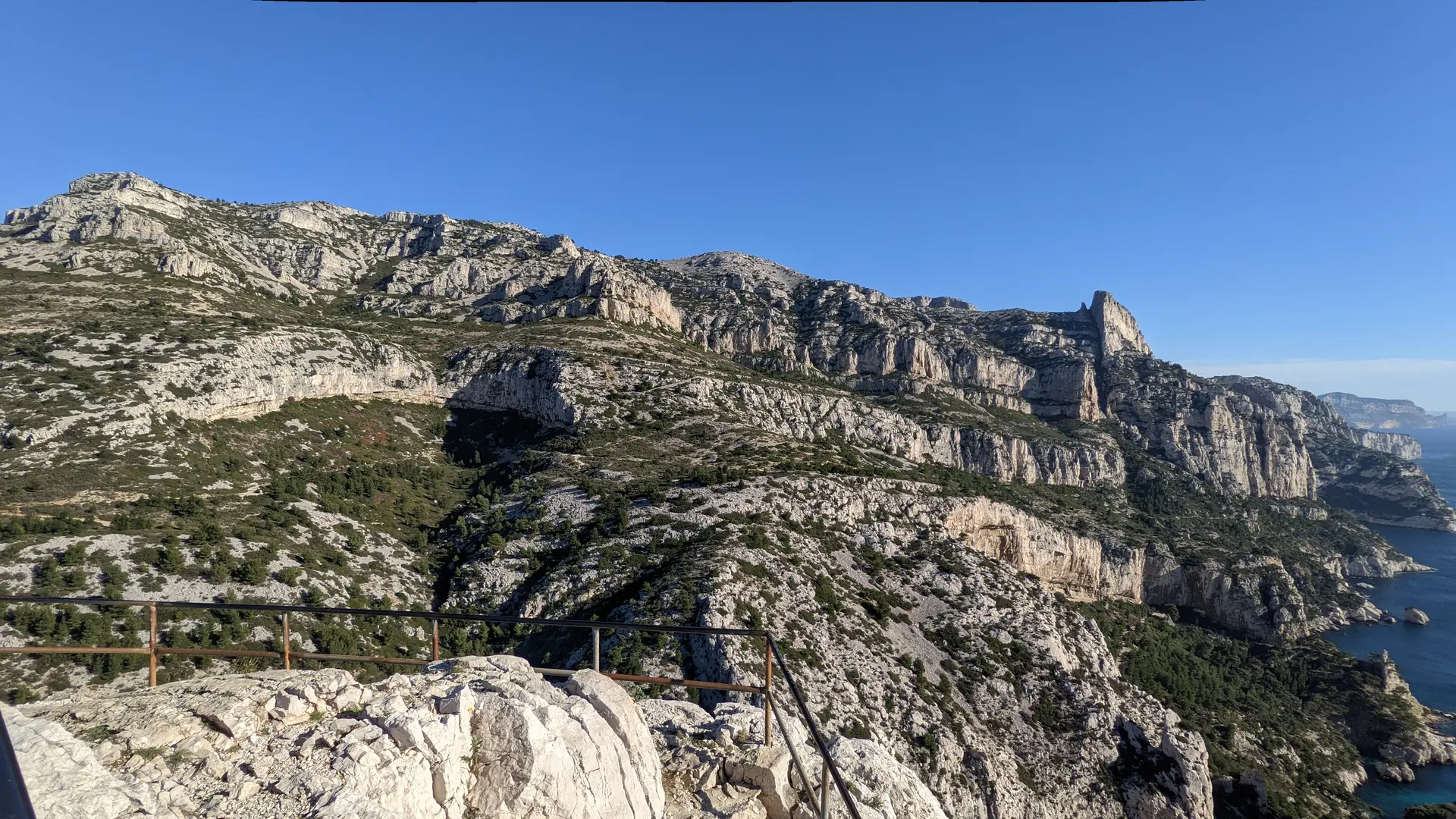
Overlooking Sugiton, the spectacular Toits cliff is the starting point for long walks to Grande Candelle and the Devenson cliffs. This ecologically rich site is home to many species, including bats and swifts. The cliffs, which are very popular with climbers, offer around a hundred climbing routes. In spring, part of the site is temporarily closed by decree to protect the nesting grounds of peregrine falcons.