Jean-Claude Izzo

Jean-Claude Izzo is a Marseilles novelist with a poignant voice who has transformed his native city into a theatre that is both intimate and universal. In his deeply human thrillers, he blends social commitment, Mediterranean poetry and a lucid look at a city full of contradictions. From Total Khéops to Solea, he has built a body of work in which Marseille is not just a setting, but a central character.

Marseilles in the dark heart of the Mediterranean

A committed novelist and poet of the intimate, Jean-Claude Izzo has anchored his work in the backstreets, bars and silences of Marseille. Through his humanist thrillers, he has given the city a new voice, one that is both dark and luminous, rebellious and loving. His novels reveal a city at human level, fragile and proud, riven by violence, united by tenderness and torn by contradictions. In just a few outstanding books, he has brought Marseilles into the world of crime fiction, while paying tribute to it as a rebellious lover, both a place of refuge and a source of wounds.

A life in the Mediterranean, between struggle and literature

Born in Marseille in 1945 into a modest family of Italian and Spanish origin, Jean-Claude Izzo embodies the diversity and contrasts of the city. He grew up in the working-class neighbourhoods, working alongside dockers, factory workers and fishermen, in an environment where solidarity rubbed shoulders with precariousness. Forced to work at a young age, he became a labourer and then a typographer, all the while forging an acute social conscience. Moved by working-class conditions and injustices, he became a pacifist activist and took part in movements for peace, justice and the dignity of the poorest people.

Curious and passionate about words, Jean-Claude Izzo started out in journalism, worked on the radio and published his first poems, which already showed his attachment to the Mediterranean and Marseilles. Writing novels came later, almost out of necessity: he poured out his anger, his hopes and his memories in dark tales that never forgot their humanity. Far from denying the city where he was born, he observes its wounds and splendours with tenderness and lucidity, transforming his own history into dense, malleable literary material. Faithful to the light of the Mediterranean, to its anger and its poetry, he has built a body of work rooted in this city-world that he has never stopped loving.

Total Khéops, the birth of Mediterranean crime fiction

With Total Khéops, published in 1995, Izzo created the character of Fabio Montale, a disillusioned cop with a love of poetry, wine, women and freedom. This novel inaugurated a trilogy (with Chourmo and Solea) that established a new genre: the Mediterranean detective novel. Violent and gentle, rooted in reality and carried by a poetic language, this work reveals another Marseille, wounded but vibrant, and makes a profound mark on contemporary literature.

An enduring literary and cinematic legacy

Jean-Claude Izzo continues to inspire writers of noir novels with his unique blend of tenderness, violence and poetry. His work also extends beyond the pages of his books into film, television and even music. His trilogy devoted to Fabio Montale has been adapted for the small screen, starring Alain Delon, helping to bring his world to an even wider audience, while his texts are regularly featured at festivals, public readings and events in Marseille bookshops.

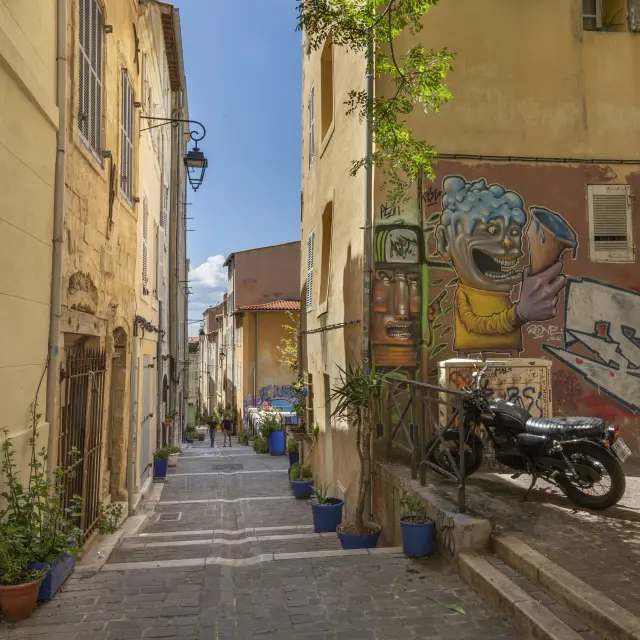
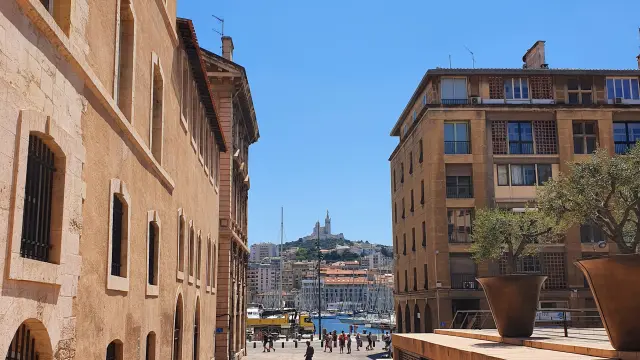
The places he has sublimated in his novels, such as the Panier district, the Prado beaches and the Samaritaine bar, retain the memory of his characters and his stories intact. To follow in Jean-Claude Izzo’s footsteps in Marseilles is to rediscover the city in a new light: more tender, more lucid and profoundly human. His words continue to illuminate its alleyways, to inhabit its quays, and to whisper in the ears of those who look upon it with that thwarted love that only the intimate can feel.