Marseille and literature

A city with many faces

Marseille inspires writers with its light, its effervescence and its Mediterranean soul. A city of contrasts and encounters, it has produced an abundance of literature, rooted in its unique history, its landscapes between sea and hills, its working-class districts and its suburbs. Poetry, drama, detective stories or social narratives: each word reveals a new face of the city of Marseille. Constantly reinvented by writers from near and far, Marseille offers readers a kaleidoscope of stories where reality meets fiction.

Writers with deep roots in Marseilles

Marseille has been the birthplace of writers and poets who have captured its soul and captured its richness. Edmond Rostand, born in the city in 1868, is still famous for his masterpiece Cyrano de Bergerac, whose verve and generosity are reminiscent of the southern spirit. The poet André Suarès, also a native of Marseille, celebrated the city in his writings, describing it as a living theatre where violence and beauty intertwine. Born in Aubagne and raised in Marseille, Marcel Pagnol is deeply attached to Provence and the city of Marseille, immortalising its landscapes, hills and inhabitants in his novels, autobiographical works, plays and films. Another author who grew up in Marseille is Jean-Claude Izzo, a leading figure in black novels who gave the city a unique place in contemporary literature with his Total Khéops trilogy, which takes a tender, lucid look at the city.

Other major writers have seen Marseilles as an indomitable, ardent and inspiring muse. Antonin Artaud, poet and playwright, stayed in Marseille on several occasions and ended his life there, leaving behind an incandescent, tormented and unclassifiable body of work. Albert Cohen also spent part of his childhood in the Mediterranean light, and the city occupies a special place in his work Belle du Seigneur. René Frégni, a contemporary writer, captured the roughness and tenderness of Marseille and its margins in his novels, while Blaise Cendrars, who was passing through, evoked the fever of its port and the diversity of its inhabitants in his poems and stories.

Through these voices, Marseille appears in turn bright, tormented, popular and universal. All these writers, from near and far, found in the waters of the Lacydon an inexhaustible source of inspiration and helped forge a literary imagination that continues to fascinate us to this day.
The voices of Provence, between Marseille and the hills

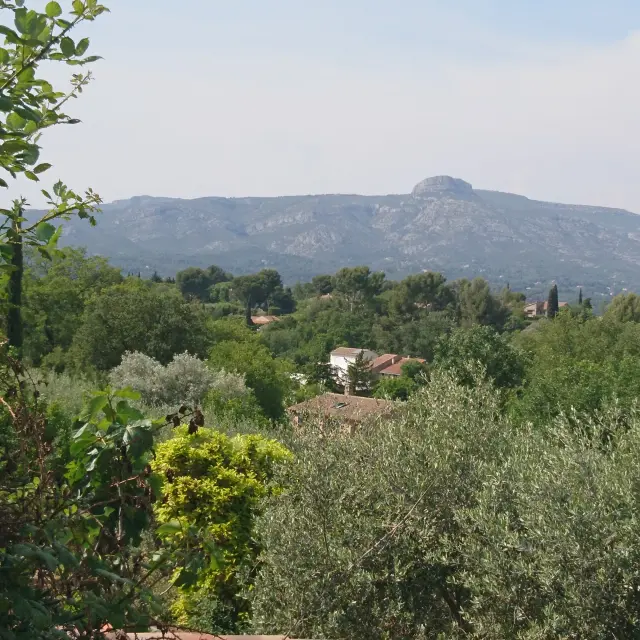
Between the Mediterranean and the hills of Provence, Marseille has seen the birth of a literature deeply rooted in its landscapes and traditions. Marcel Pagnol occupies a special place in the hearts of the people of Marseille, with his lively, colourful and glib writing. Open La Trilogie marseillaise and his Souvenirs d’enfance to discover tender and funny tales, somewhere between fiction and reality, that give Provence a universal dimension.

Even if it remains on the fringes of their lives and works, Marseilles shines thanks to the regionalist writers rooted in this southern land and Provençal culture that are an integral part of the city’s identity. Alphonse Daudet, born in Nîmes, spent a long time in Provence and brought its landscapes to life in Les Lettres de mon moulin, a veritable ode to olive trees, cicadas and southern legends. Alongside them, other authors celebrated Provence with the same passion. Frédéric Mistral, winner of the Nobel Prize for Literature in 1904, glorified the Provençal language and soul in his poems and his masterpiece Mirèio, while defending Occitan culture. Joseph Roumanille, his friend and teacher, was a major figure in this literary movement, helping to found the Félibrige.

These writers, each in their own way, captured the spirit of Provence, between Marseille and the hills, making its landscapes and people the heroes of a luminous, endearing and timeless literature.

Detective fiction in Marseille, between light and shadow

Marseille is an ideal setting for crime novels, and many authors have imagined the plots and acts that can be hatched in its bustling streets, teeming port and working-class neighbourhoods. The city of light and shadows, marked by striking contrasts, has inspired writers for decades, providing the backdrop for breathtaking plots that bring tormented characters to life.

Jean-Claude Izzo established the Marseilles genre with his famous Total Khéops, Chourmo and Solea trilogy, in which he depicts a city that is both harsh and deeply human. But he is not alone in choosing Marseille as his backdrop: Maurice Gouiran has enriched the genre with his edgy writing, highlighting local social and political realities, while Cédric Fabre weaves dark tales in which the city becomes a character in its own right.

In a more historical vein, Jean Contrucci has captivated readers with Les Nouveaux Mystères de Marseille, a series of detective stories set in the city during the Belle Époque, in which criminal intrigue and historical detail combine in a delicious atmosphere.

René Frégni, although associated with Manosque, often evokes Marseille and its fringes in his novels imbued with a raw melancholy. François Thomazeau, a journalist and writer, has also made a name for himself in the Marseille crime genre with stories that explore its darker side, as in La faute à dégun.

Literature and the suburbs, from the margins to the foreground

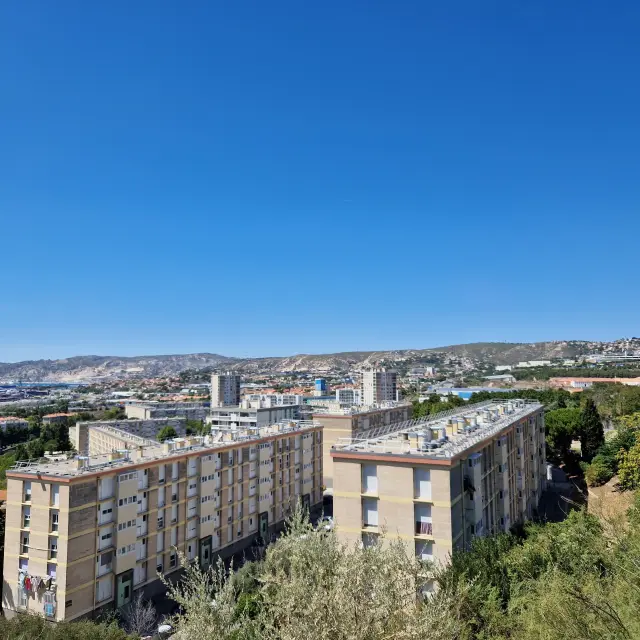
On the outskirts of Marseille, in the northern neighbourhoods or on the hilltops, a new literature has emerged, driven by those who live on the margins and give them a voice. The suburbs of Marseille, long invisible in traditional narratives, are now at the heart of contemporary writing that combines personal accounts, social fiction, urban poetry and stories of emancipation.

This literature recounts life on the estates, the discreet solidarity, the dreams of the younger generations and the social fractures, while celebrating the cultural richness of these areas. It draws as much on orality and music, with references to slam, rap and spoken word, as it does on the codes of the social novel or detective story. Writer Cédric Fabre epitomises this sensibility, blending the realism of working-class neighbourhoods with the intensity of dark plots in his novels, giving voice to these forgotten territories. In 2014, Philippe Pujol won the 76th Albert-London Prize for major written press reportage for his series of articles entitled ” Quartiers shit ” on the northern districts of Marseille.

Through these texts, the suburbs of Marseille take centre stage in literature, offering a fresh look at the city: the imaginary gives life to a narrative that is lucid and committed, but also full of hope and high standards. These voices from the suburbs show that here too, literature is reinventing itself, powerful and lively, resolutely contemporary and carrying a strong, committed message.