La Digue du Large

Between maritime history and heritage

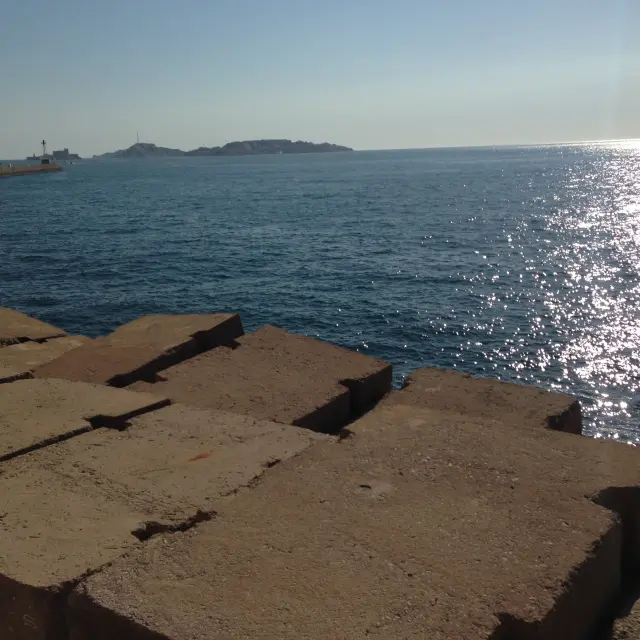
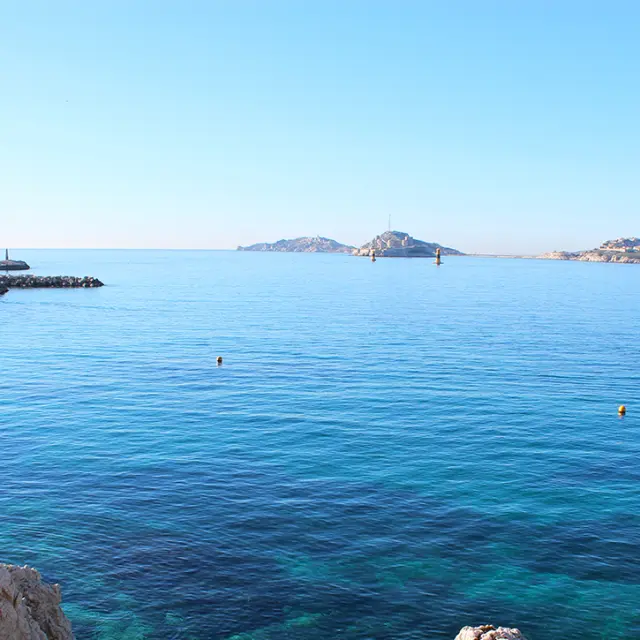
Located at the entrance to the port of Marseille, the Digue du Large is a maritime structure of crucial importance to both the history and the economy of the city. It was built to protect the port from the onslaught of the sea and to provide a safe haven for the many ships that pass through.

Origins and construction

Construction of the Digue du Large dates back to the mid-19th century, a period marked by major infrastructure works. The project was initiated in 1844 under the reign of Louis-Philippe and continued to evolve under Napoleon III. The breakwater was a direct response to the need to modernise the port andincrease its capacity to accommodate ever-largerships, in line with growing industrialisation.
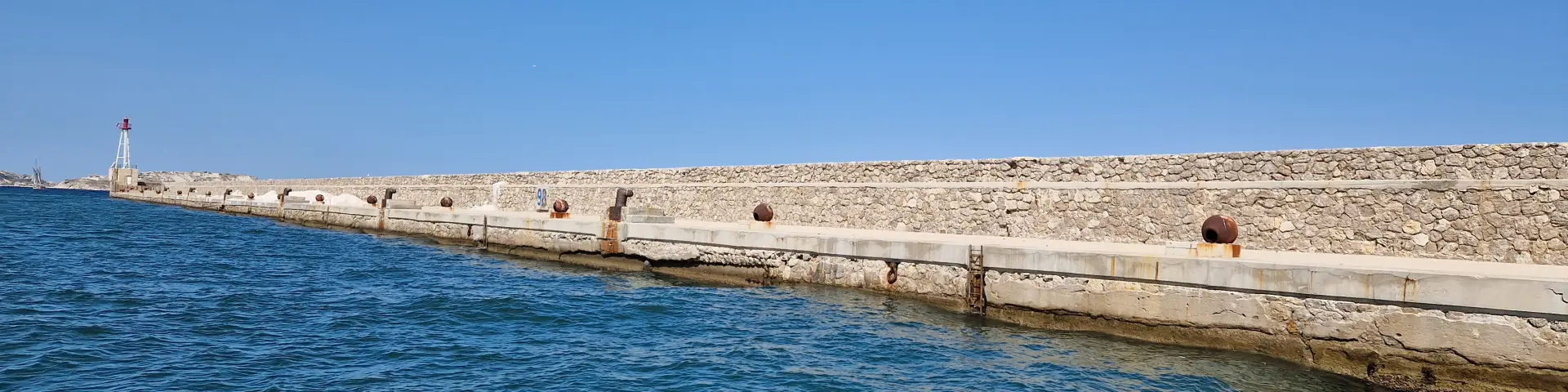
Today the breakwater stretches for almost 7 kilometres from the entrance to the Old Port to l’Estaque.

Developments and improvements

Over the years, the Digue du Large has undergone a number of modifications and extensions. Initially designed as a purely functional structure, it has been strengthened and lengthened several times to meet the changing needs of the port and the challenges posed by erosion and weather conditions. Each modification has contributed to its robustness, making it an impressive monument today and an integral part of the port’s infrastructure. It was completed in 1925. A protective shield for the port, it plays a crucial role in maritime safety.
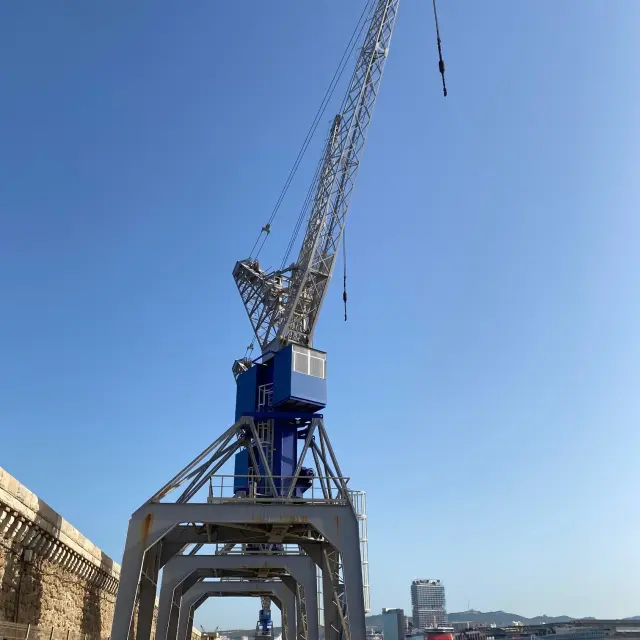
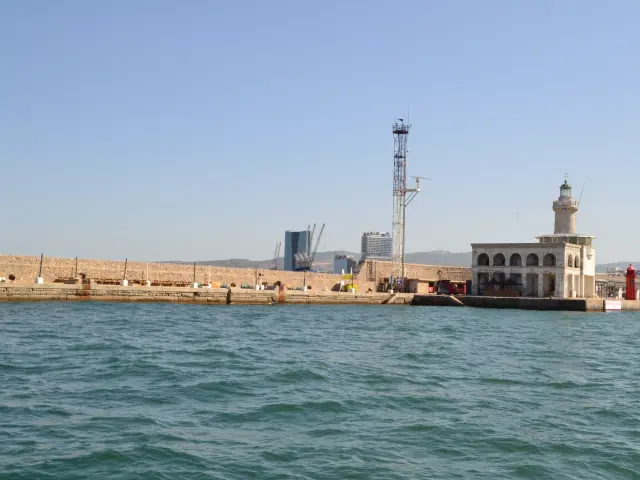
La Digue today

Whilst during the Belle Époque locals used to stroll, picnic or even fish there, today it is a little-known spot for most people in Marseille, as the sea wall has been closed since 2001, with a few exceptional openings such as in 2013 for Marseille Provence 2013, when a monumental structure was installed by the artist Kader Attia. In 2019, it was the artist Alexandre Périgot who installed his works (containers with words inscribed on them). More recently, in 2023, salt sculptures created by Mathieu Lorry Dupuy have blended into the landscape of the breakwater.

Today, it features a lighthouse (Sainte-Marie Lighthouse) at its southern tip, alongside five cranes standing nearly 40 metres tall, mounted on rails, which once enabled dockers to load and unload goods more easily. These five cranes, nicknamed ‘Les élégantes’, have survived wars and the port’s redevelopment. They have been out of service for over 20 years. On the Estaque side, there is a building that once housed the former administrative offices and workshops of the Paquet company. Left to fall into disrepair, it was nevertheless occupied for 25 years by the artist Hartmut Bosbach, who was forced to leave in 2018. Today, the building stands completely abandoned.

Special tours of the Digue du Large

The Digue du Large is opening to the public for special tours organised by the Marseille Tourist, Leisure and Convention Bureau.
From 27 June to 5 September – Every Wednesday and Saturday at 8.30 am
Location: Vieux-Port
– 4 quai du Port – 13002 Marseille

You must arrive 30 minutes before departure. Reserved places are held until 15 minutes before departure. After 15 minutes, they will be made available to people on the spot who do not have tickets. Places are released online every fortnight. Bookings for the first fortnight of August will open at the end of July.

Registration is free but compulsory.

Things to note

It can be hot on La Digue and there is no shade. So bring a hat, sunglasses, sun cream and water.
The ground is uneven. Bring comfortable shoes.
Access for PRMs and pushchairs is possible, but the cobblestones are difficult to navigate.
(Please signal wheelchairs upstream at booking@marseille-tourisme.com).

Please do not eat, throw rubbish or dive on the Digue.
Swimming is prohibited
Dogs are not allowed (except assistance dogs)