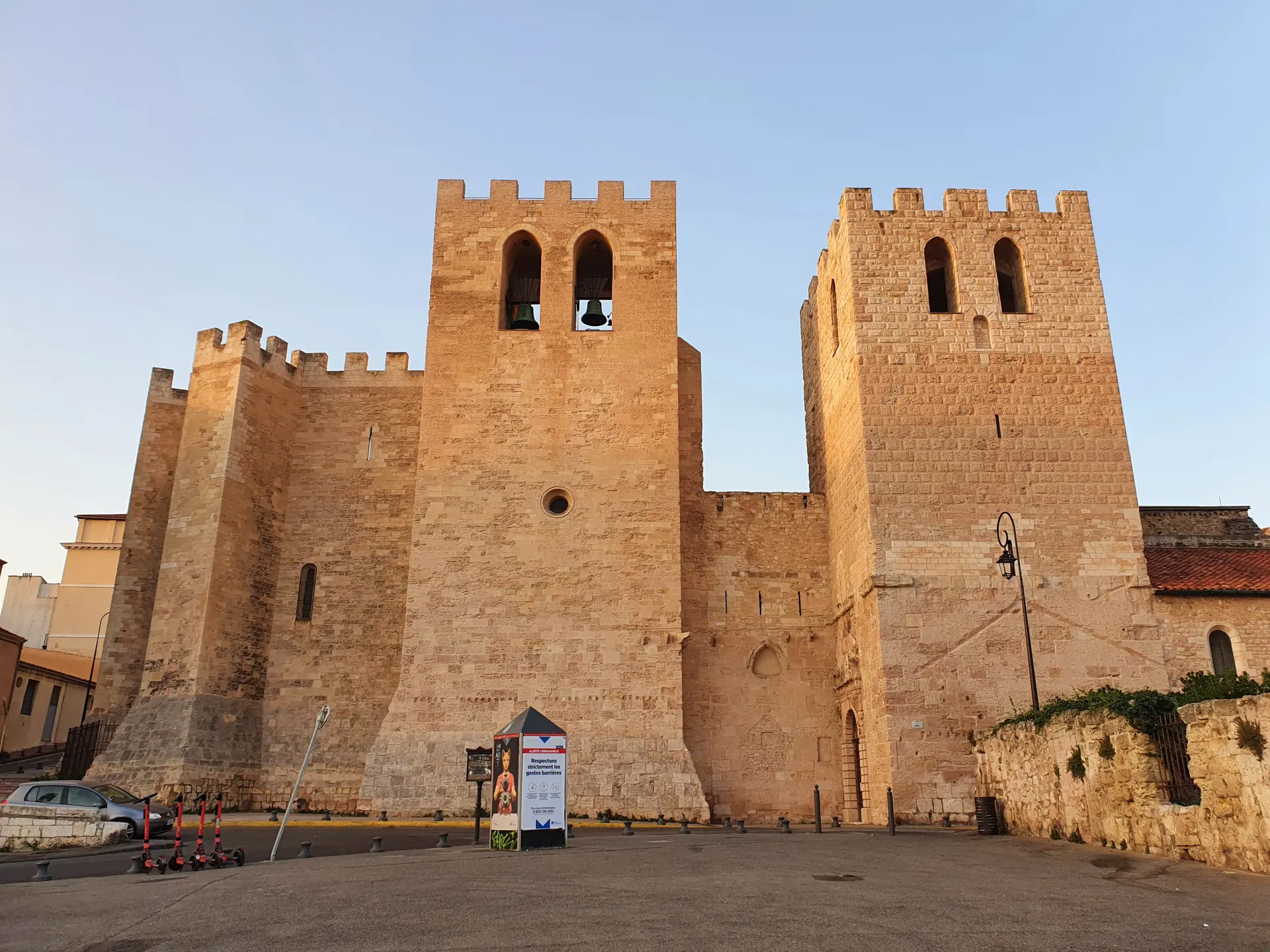
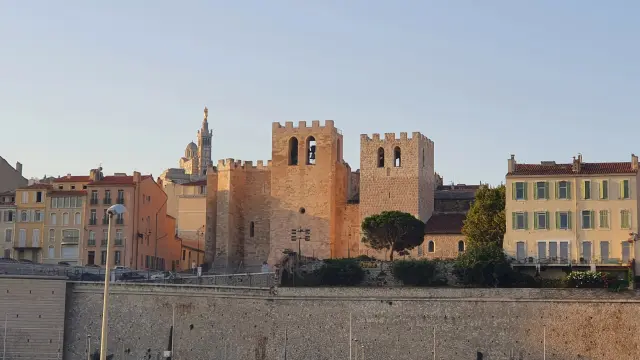
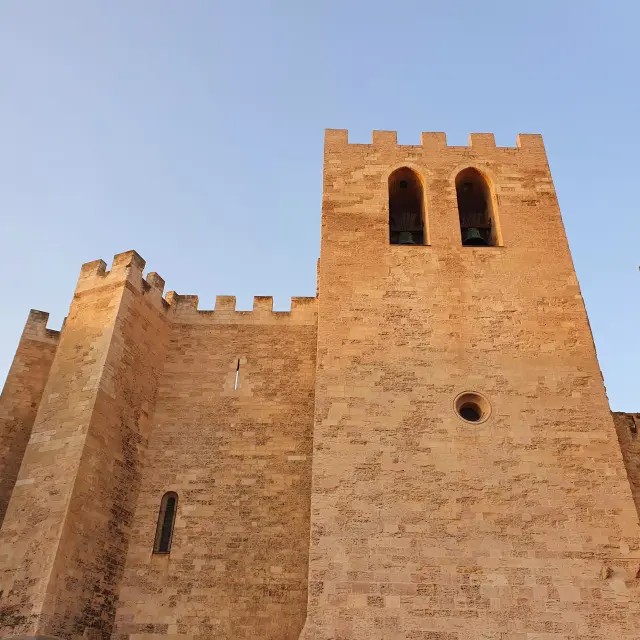
A bit of history
In ancient times, the site of the present-day Abbaye Saint-Victor was occupied by an open-cast quarry. The blocks of stone extracted from it were used, in particular, for the construction of the ancient port of Marseille.
Situated outside the city walls, this quarry soon became the site of a necropolis. At that time, Marseille occupied only the northern shore of the Vieux-Port, and burials were prohibited within the city walls. Several necropolises were thus established outside the city walls, including that of Saint-Victor.
It was in this quarry that the body of the Christian martyr Victor was laid to rest. A Roman soldier, he refused to sacrifice to idols. During the persecutions, he was quartered, crushed under a millstone and then thrown into the Old Port.
Very soon, a pilgrimage developed around his tomb. Many people of Marseille then wished to be buried alongside him, as Saint Victor was regarded by the early Christians as an intercessor who could help them attain salvation more quickly and easily.
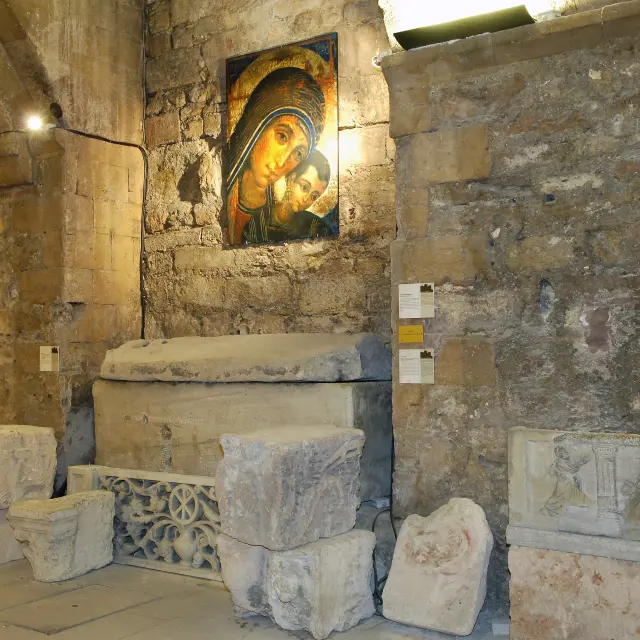
In the 5th century, a basilica was built on this site. The areas now incorrectly referred to as ‘the crypts of Saint Victor’ are in fact the exceptional remains of this basilica and the ancient quarry.
In particular, you can see an impressive accumulation of sarcophagi, stacked up to seven levels high. Some have never been opened and are valuable examples of Christian art from the 4th and 5th centuries.