The Fanal Tower

A lookout at the entrance to the Old Port

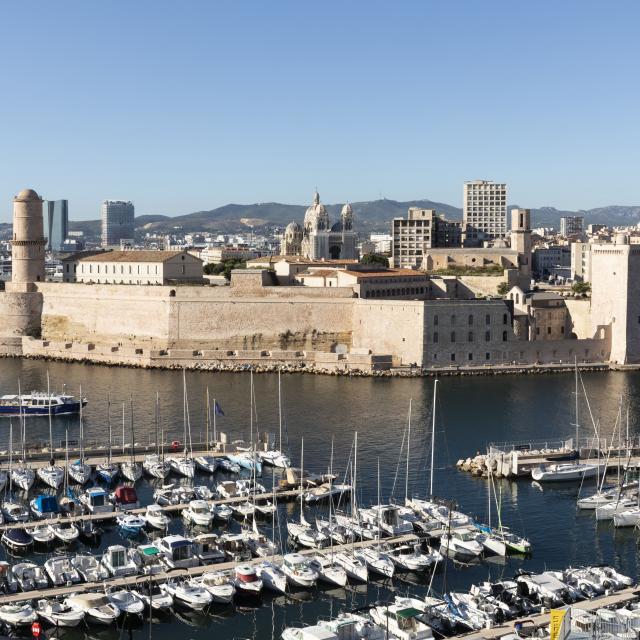
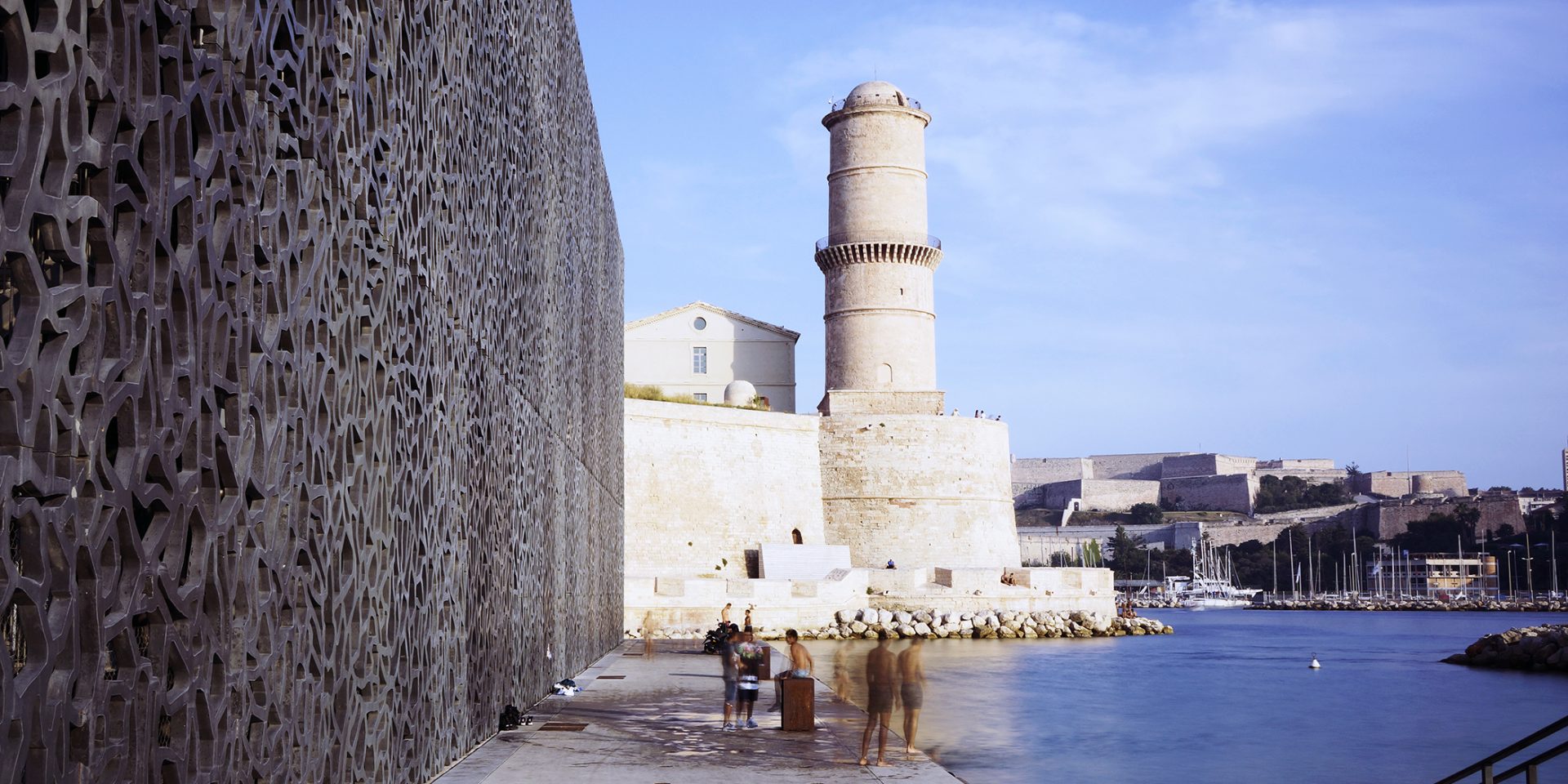
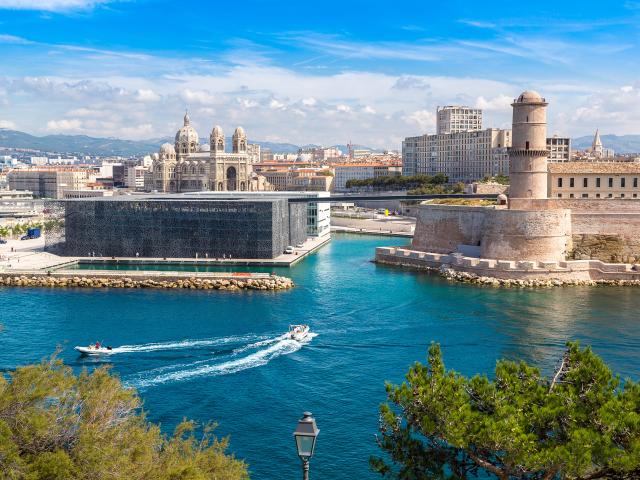
This round tower at the entrance to the Old Port dominates Fort Saint-Jean and can be seen on many postcards and photographs of Marseille. But its origin and history remain largely unknown, and it remains mysterious in many ways. Discover the Fanal tower, the lookout that has guided ships for centuries.

A tower to guide ships

In the 17th century, Marseille was one of the main trading ports in the kingdom of France. A noria of ships of all sizes sailed in and out of the port of Marseille, and this incessant ballet presented the risk of grounding or shipwreck.
The Marseille shipowners, who financed these sea voyages, needed to ensure the safety of their investments right up to the mooring. They asked for a tower to be built to guide sailors arriving at night, in fog or mist. Lights were installed on the summit to make it easier to spot the entrance to the Lacydon inlet. Its name is a reminder of this original purpose: “fanal” comes from the ancient Greek phanós, meaning “lantern”.
The Fanal tower, a remarkable structure

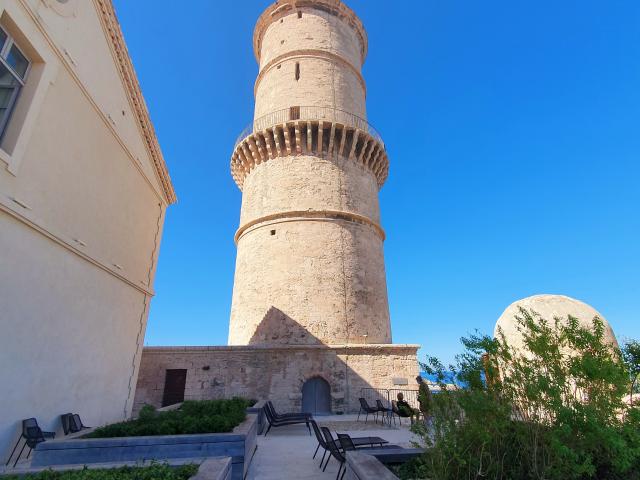
Built on a square pedestal 30 metres high, the Fanal tower towers 50 metres above the sea. The privileged few who can access it enjoy a 360-degree panoramic view of the city.
Construction of the Fanal tower began on 22 March 1644, under the supervision of three masons: Bœuf, Gay and Alluys. The building was constructed from solid ashlar, transported by boat and then erected on site. It takes the form of a double cylinder and is surrounded at mid-height by a spiral balcony resting on false machicolations. The 132-step spiral staircase leading to the top is illuminated by a number of loopholes, adding to its martial allure. It is crowned at the top by a stone dome that gives it a distinctive look.
Renovation work undertaken from 1980 onwards has restored the Fanal Tower to its former glory, and it is now a distinctive architectural feature of the Mucem museum.

From lookout to prison, an eventful destiny

The Fanal tower faithfully fulfilled its role for several centuries, lighting the lantern when a ship arrived, at night or in fog. Two cannons were once installed at the foot of the building and fired a salvo to greet the entry of a ship into the channel. In 1837, a fixed light was lit on a cylindrical masonry turret 5.75 metres high, located at the foot of the round tower. This light was raised to 7 metres in 1912 and placed on a red pylon.

Fort Saint-Jean was converted into a prison during the French Revolution. The tower was divided into several parts, with a succession of small round rooms that proved to be excellent cells. This function continued until 1962, as evidenced by the interior walls covered in graffiti: prisoners wrote down their detention calendars, drew pictures (some of them erotic) and even left bird names!

Visit the Fanal tower

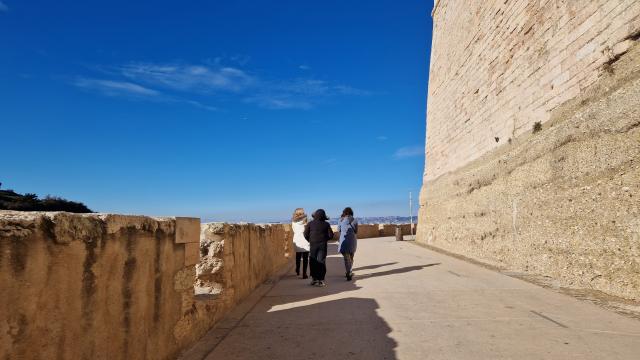
The Fanal tower is not open to the public, but you can admire it up close during a visit to Mucem. Fort Saint-Jean is an integral part of the Museum of European and Mediterranean Civilisation (Mucem). With free access to the Mucem terrace, we invite you to climb the steps of the square tower of Roy René, 28.5 metres high, where a breathtaking view of the harbour and the city awaits you. If you’d like to find out more, take our guided tour.

Subscribe to our newsletter

Stay connected and find out all the latest news from Marseille