A little history
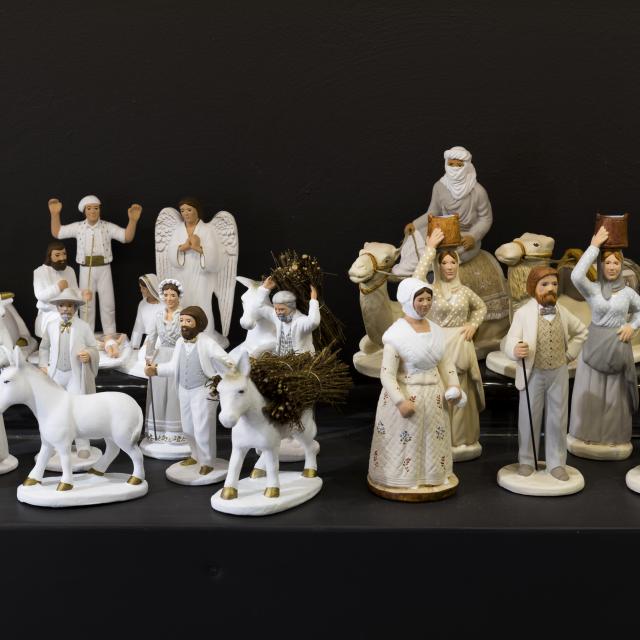
Traces of santons can be traced back to 12th century Marseille. These small sculpted statuettes represented the Nativity and were installed in churches. (santon comes from the word santibelli, a clay figurine: hence the Marseilles expression ” Don’t just stand there like a Santibelli!)
The first living cot appeared in Italy in 1223. It was Saint Francis of Assisi who introduced this tradition. The practice soon spread throughout Italy, and it was the Franciscan monks who introduced the cots to Provence.
During the French Revolution, nativity scenes in churches were banned, and the people of Marseille began to create individual nativity scenes in their own homes.
The santon industry was launched and the first moulds appeared in 1798. This large-scale production enabled every inhabitant of Marseille to have his or her own cot.
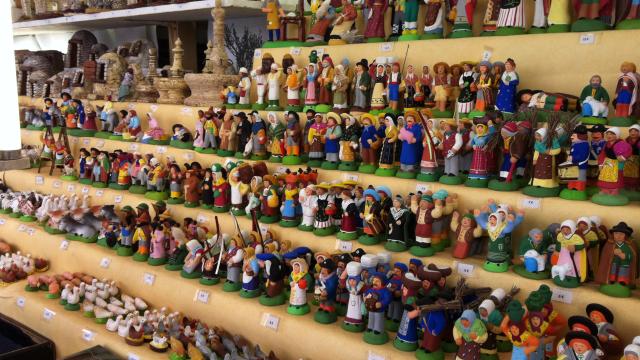
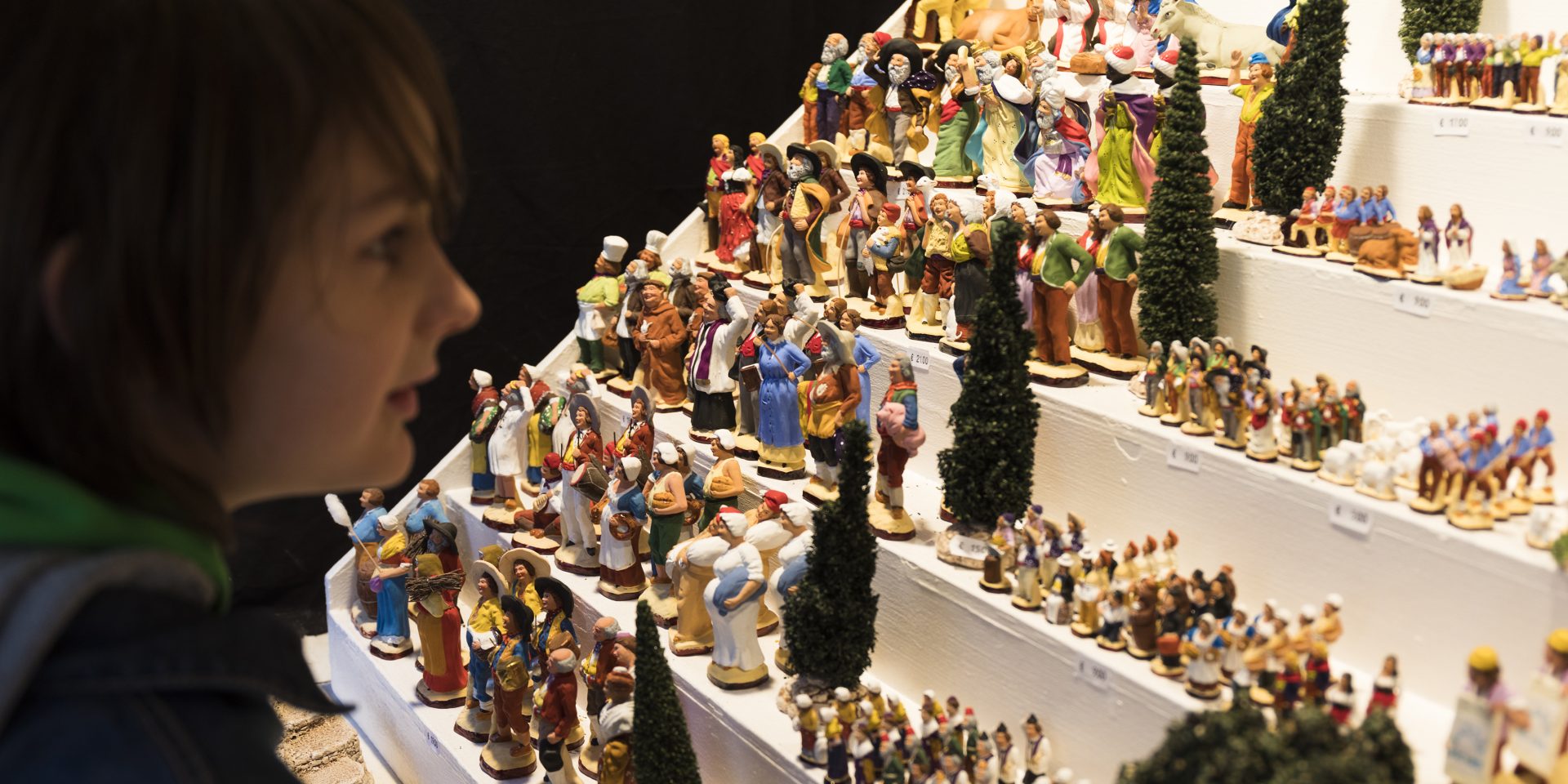
The first master santon makers appeared in the 19th century. Santons represented characters from everyday life. Marseille became the Santon capital.
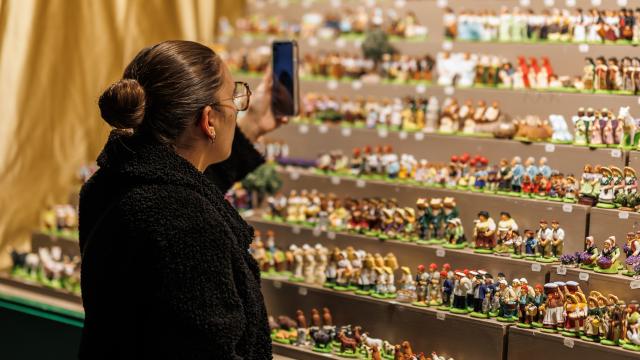
The first Santon fair in Marseille took place in 1803 on the Cours St Louis. Since then, it has moved several times, to Allées de Meilhan, Place Général de Gaulle, Vieux-port, etc.