Robert Guédiguian

A committed and deeply Marseilles-based cinema

A key figure in French cinema, Robert Guédiguian is a unique and deeply Marseillaise voice. This committed director has touched the soul of Marseilles with his camera, filming its working-class neighbourhoods, its solidarity and its struggles with a rare sincerity. In a body of work that is both social and poetic, he gives a voice to the invisible, and makes Marseilles much more than a backdrop: a living, plural and exuberant character at the centre of his stories.

A child of Endoume turned committed filmmaker

Robert Jules Guédiguian was born on 3 December 1953 in Marseille, in the working-class district of Endoume. His family embodied the cosmopolitan soul of the city, with a father of Armenian origin and a German mother. This mix of roots forged a complex sense of identity that was present from childhood. He himself confesses to being “the child of a genocided people and a genocidal people”, this duality nurturing a humanist and tolerant vision.

True to his working-class roots, he joined the French Communist Party in 1968, making social commitment a pillar of his identity. Although he left the party in 1979, he remained very active and regularly showed his support for left-wing personalities.

Marseilles became the main setting for his films. He focuses on the “poor people”, the workers, the unemployed, the invisible people whose dramas and solidarity he recounts with empathy and lucidity. His Marseilles roots, combined with his social convictions and multicultural heritage, have shaped a deeply committed body of work.

An earthy and outspoken language

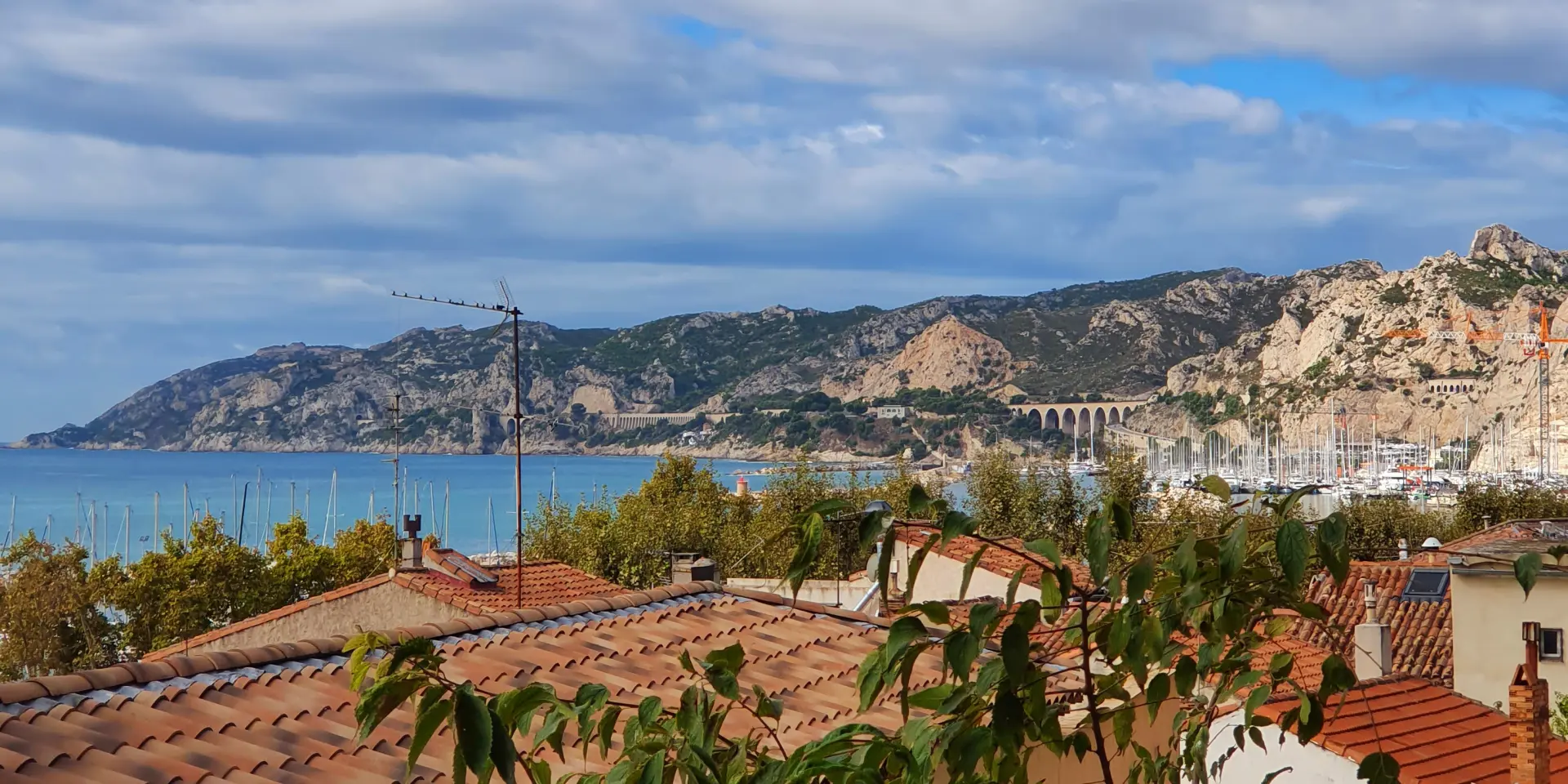
For Robert Guédiguian, Marseille is more than just a film set: it becomes a character in its own right. True to his roots, Guédiguian films the working-class neighbourhoods of Marseille, particularly l’Estaque, with an undeniably authentic humanity. Since his first feature film, Dernier été (1981), this familiar territory has been a living entity, where the sea, the wind and the light create a very special atmosphere.

The story of the director’s childhood, marked by bathing in the port of L’Estaque, regularly resurfaces in his images: quayside cafés-restaurants, bread kiosks and dykes, like so many landmarks imbued with local memory. This love seems eternal, since in La Pie voleuse, his most recent work, released in cinemas in 2025, Robert Guédiguian once again takes his cameras to the streets and quays of l’Estaque.

But Marseille is more than just L’Estaque, and the filmmaker explores other places too: the city stretches south to the calanques in La Villa (2017), and takes a step out to sea on the Frioul islands in Marie-Jo et ses deux amours (2002). These films explore the different facets of a city with many faces, highlighting the solidarity, fragility and resilience of its inhabitants. And to embody this popular and supportive Marseille, Guédiguian has always relied on his trio of loyal actors: Ariane Ascaride, Jean-Pierre Darroussin and Gérard Meylan.

A filmography inhabited by the city of Marseille

Robert Guédiguian’s films forge an unbreakable link between the intimate and the collective, with Marseilles as a constant anchor. Through portraits of ordinary residents, he composes human chronicles deeply rooted in the social reality of the city. These three emblematic feature films encapsulate the essence of his cinema: committed, supportive and viscerally Marseillaise.

Marius et Jeannette (1997)

This “tale from Estaque”, selected at Cannes and awarded the Prix Louis-Delluc, features Marius, a guard in an abandoned cement factory, and Jeannette, a supermarket cashier and single mother. In this working-class setting, the chemistry between the two characters reveals warmth, solidarity and rebirth. Guédiguian celebrates these neighbourhood ties that resist precariousness, with a luminous tenderness and a very sincere humanity.

La ville est tranquille (2000)

This drama follows the lives of several people in Marseille, including Michèle, a worker in the Old Port, who is trying to save her drug-addicted daughter. Through a gallery of characters from working-class backgrounds, Guédiguian paints a bleak picture of Marseilles society faced with unemployment, loneliness and a loss of bearings. The film, largely shot in l’Estaque, depicts a city that is clear-sighted in the face of the difficulties it faces, and that relies on words and solidarity to build its future.

Les Neiges du Kilimandjaro (2011)

Loosely based on a poem by Victor Hugo, this film follows Michel, a trade unionist who is made redundant, and his wife after a job cut in the shipyards. The story, which is both intimate and supportive, celebrates the dignity of the working class. Robert Guédiguian reveals a discreet Marseille, far from the tourist clichés. Winner of an award at the Valladolid Festival and the LUX Prize, this social drama offers a message of hope deeply rooted in the city of Marseille.

Marseille as seen by Guédiguian: between memory and modernity

Through Robert Guédiguian’s films, Marseille is revealed in all its complexity: our city is popular, constantly changing, and demonstrating an astonishing resilience. Guédiguian captures the social and urban transformations that have taken place, from the old working-class areas that are now disappearing to the new landscapes shaped by economic renewal and planning policies. But beyond the buildings, factories and quaysides, it is a living, popular memory that he preserves. With him, Marseilles is anything but static: it becomes a narrative, a movement, a transmission. It’s a deeply rooted cinema, one that sheds light on the present without ever losing sight of its roots.