See the 'crèches' (nativity scene) in Provence

Living art at the heart of Christmas traditions

In Provence, and particularly in Marseille, Christmas is inextricably linked with Provençal nativity scenes. With santons fashioned using ancestral skills, traditional fairs that bring towns and villages to life, and live nativity scenes, a whole cultural heritage is reborn every year-end.

The history of nativity scenes in Provence

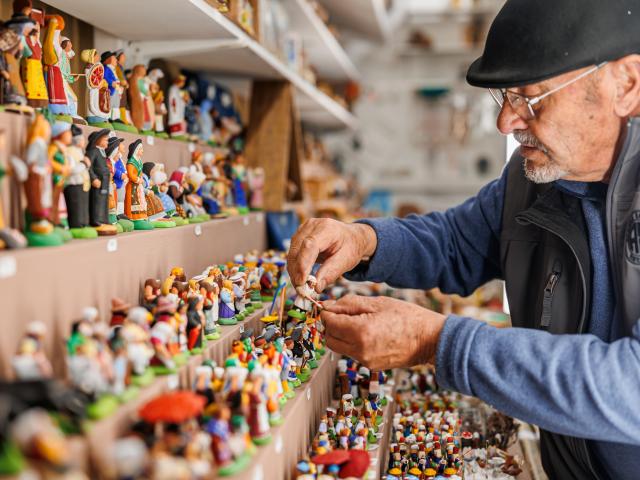
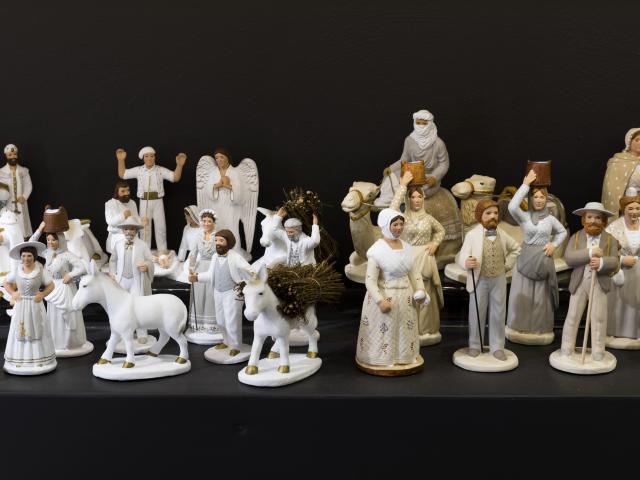
Christmas cots originated in Italy in the Middle Ages, but did not really take off in Provence until the 18th century. Banned from churches during the French Revolution, they found refuge in homes. It was at this time that the first santons (from the Provençal santoun, meaning “little saint”) appeared, small clay figurines shaped by hand by santon craftsmen.

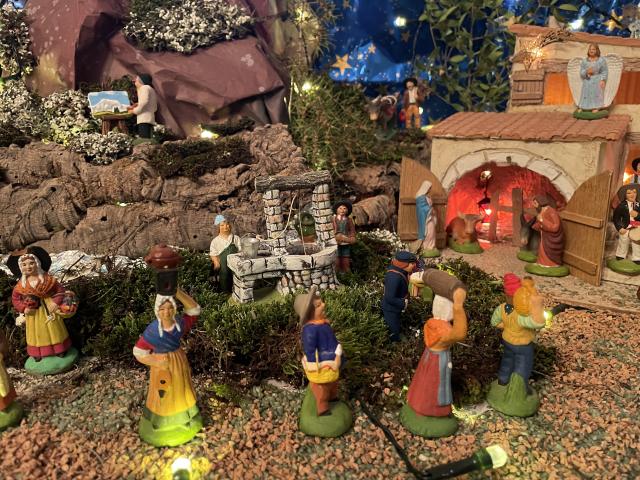
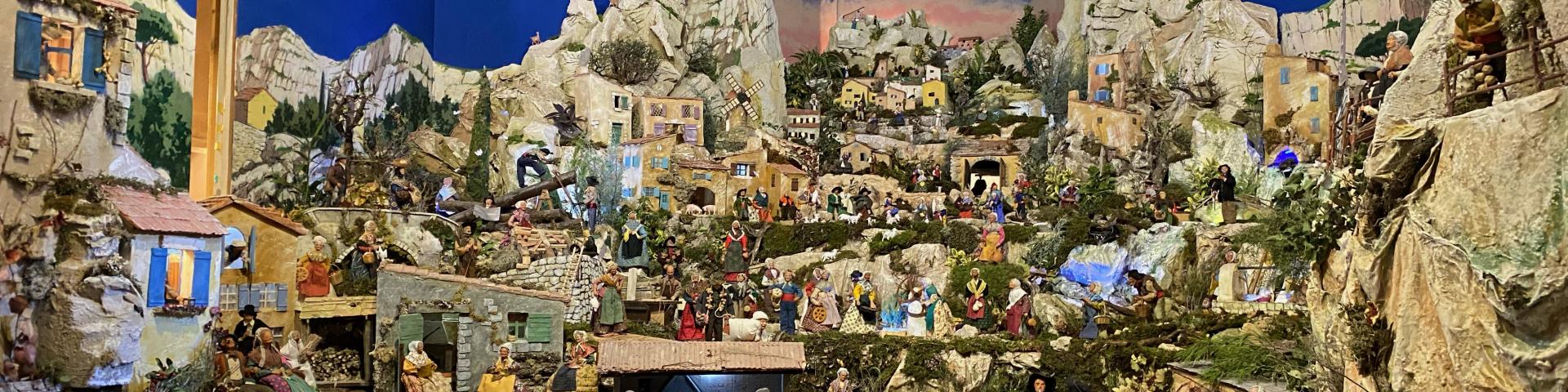
The distinctive feature of the Provençal cot is that it incorporates, alongside the biblical scene, a whole rural world typical of Provence: fishermen, shepherds, washerwomen, a drummer, a Ravi, a miller, a grinder… A vibrant tribute to everyday life in days gone by.

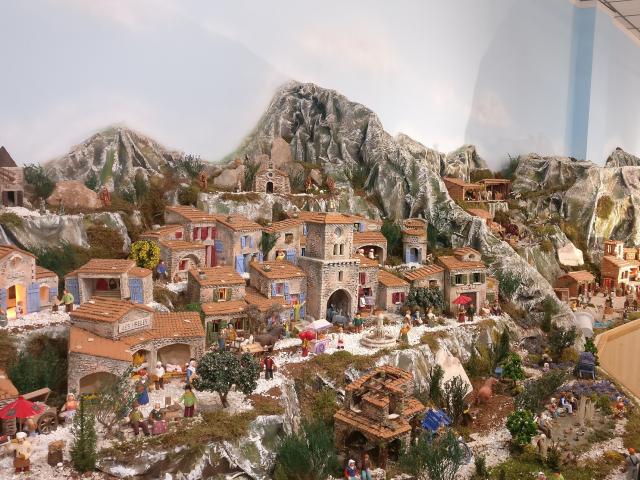
Even today, the Provençal cot comes in a variety of detailed settings, miniature villages and authentic landscapes, highlighting this unique cultural heritage.

The first master santonniers appeared in the 19th century. The first santon fair was held in Marseille in 1803. Marseille then became the capital of santons.
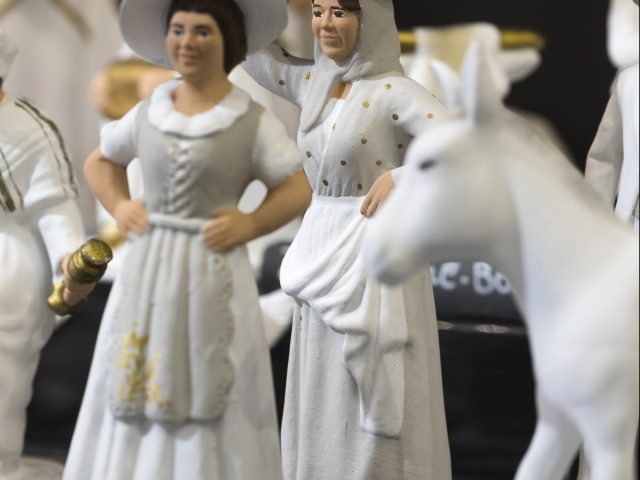
Christmas “crèches” in Marseille and Provence families

In Marseille, as throughout Provence, the nativity scene is much more than a simple Christmas decoration: it’s a real family ritual. From the end of November onwards, families bring out their santons, and for a few weeks, these terracotta “little people” leave their boxes to find the light again, bringing to life a miniature universe that captures the spirit of Christmas.
The cot is usually set up on a piece of furniture or in a corner of the room (usually in the living room). It is often decorated with moss gathered in the forest, rock paper, cork, small lights or a mirror representing a stream or a wash-house.
According to tradition, the Ravi (symbol of joy and innocence) is the first character to be placed. The Christ Child is not installed until midnight on 24 December, while the Three Wise Men join the scene on 6 January, positioned to the right of the stable. The Virgin Mary is positioned next to the donkey and Joseph next to the ox. The positioning of the santons is never left to chance; they must all give the impression of moving towards the stable where the Nativity takes place. In this way, a whole ritual is put in place, and everyone gives free rein to their imagination when it comes to decorating.

The Foire aux Santons, a not-to-be-missed event

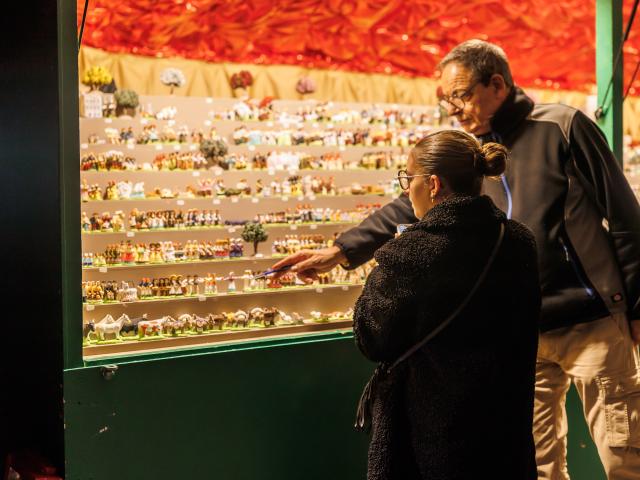
Founded in 1803, the Foire aux Santons de Marseille is the oldest santon fair in France. Held every year on the Old Port, it welcomes santon makers from all over the region, of whom there are around twenty.
Unlike in the past, today’s santons are made from red clay and baked in an oven at over 800 degrees Celsius to ensure they stand the test of time.

At the Foire de Marseille, you’ll find hand-painted clay and dressed Santons in a variety of sizes, handcrafted decorations (mills, bridges, fountains, sheepfolds, etc.) and miniature accessories.
The Santon Fair opens every year on the 3rd weekend in November and closes on the last day of the school holidays in January.

Aubagne, capital of santons and Provencal ceramics

While Marseille is renowned as the historic capital of the Santon Fair, Aubagne is one of the leading centres for Provençal ceramics. Every year during the festive season, the town hosts its own Santon and Ceramic Fair, a must-see event for fans of traditional crafts.

Aubagne is also home to the famous Village des Santons, a monumental nativity scene with almost 4,000 santons, covering an area of more than 230 m². This magical place is a must-see, plunging visitors into the heart of Provencal tradition.

Live nativity scenes, a festive and popular tradition

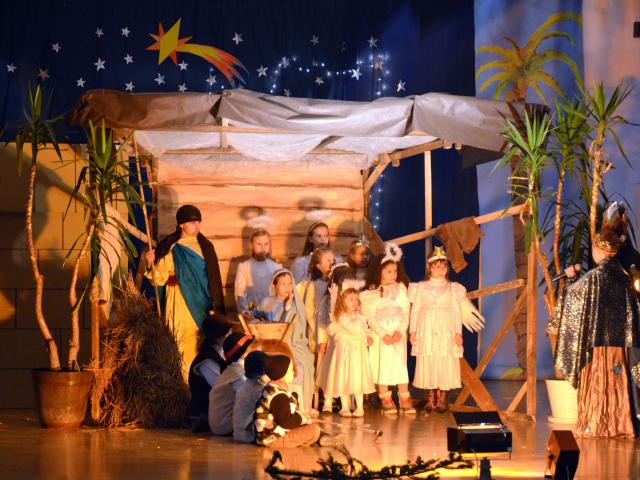
In Provence, a number of communes are carrying on the tradition of live nativity scenes, popular shows in which local people play Provençal characters and re-enact the Nativity in a natural or village setting.
Accompanied by Provençal songs and music played on the galoubet and tambourine, these living nativity scenes immerse young and old alike in the authentic magic of Christmas in Provence.

Santon fairs, family nativity scenes, exhibitions, craft workshops, live shows… Provence, and Marseille in particular, offer a unique opportunity to immerse yourself in the magic of Provençal nativity scenes. A blend of tradition, craftsmanship and emotion, Christmas cots remain one of the strongest symbols of the festive season in the south of France.
Whether you’re a craft enthusiast, a lover of local traditions or looking for a family outing, a visit to the Provençal cots is a must during the festive season.