



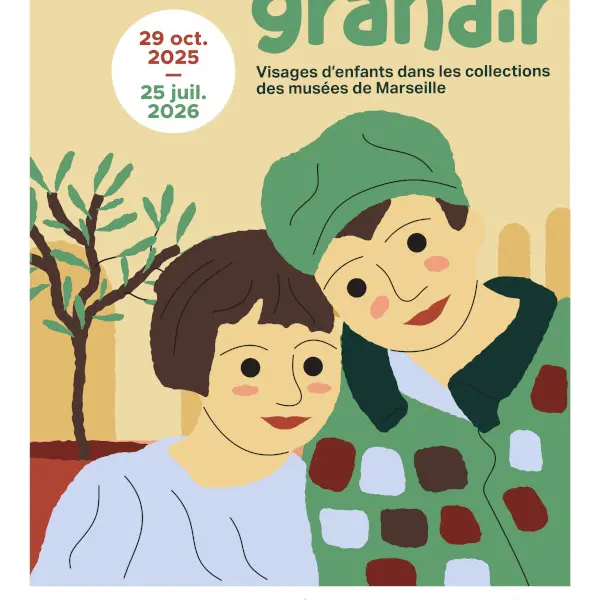
For this new exhibition, Préau des Accoules - musée des enfants, is offering a journey that brings together objects and works of art from Antiquity to the present day, drawn from the collections of all the Museums of Marseille.
EXHIBITION PRESENTATION
Looking at childhood differently
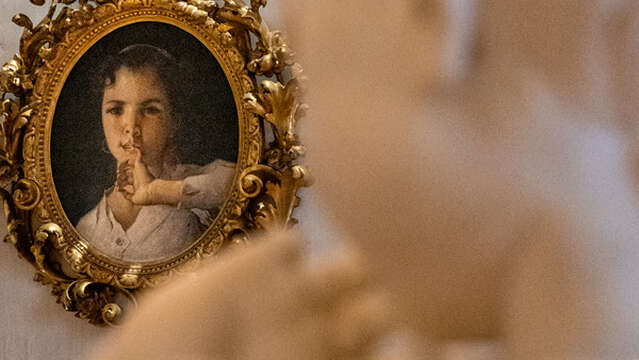
"The Art of Growing Up" takes visitors on a journey through representations of childhood in the collections of Marseille's museums, from Antiquity to the present day. Through a selection of works from heritage, ethnographic and artistic collections, the exhibition explores how artists and the societies they reflect have seen, understood and represented children.
An exhibition designed for children
Conceived and produced by the Musée des enfants - Préau des Accoules, this exhibition is aimed primarily at a young audience, with each area designed to encourage curiosity, observation and self-expression.
Through playful devices, animated tours and hands-on art workshops, children become actors in their discovery: understanding images, feeling emotions, experimenting with creation.
A universal theme: childhood in art
- The child in art history
- The representation of children has always reflected the social, spiritual and cultural conceptions of an era:
- Antiquity: realistic representation, study of the body and portraiture.
- Middle Ages: sacred image, centered on the Infant Jesus.
- 17th century: idealization and hope, the child becomes a subject in its own right.
- 19th century: emergence of realism, freedom and spontaneity.
- Contemporary times: the child becomes a mirror of our society and our emotions.
- Throughout the centuries, artists have depicted children as heirs, symbols, workers, dreamers and witnesses of their time.
EXHIBITION ITINERARY
1. Being born and growing up: children in myth and religion
The exhibition opens with the symbolic representations of childhood in major civilizations.
In Greco-Roman mythology, child gods such as Eros, Dionysus, Hermes and Heracles embodied love, vitality, cunning and courage.
In ancient Egypt, Harpocrates, son of Isis and Osiris, represents youth and rebirth.
In the Christian religion, the Infant Jesus occupies a central place: a symbol of incarnation and hope, he inspires countless works imbued with tenderness and faith.
2. Childhood and world rituals
By browsing through ethnographic objects and stories, visitors discover how childhood is experienced elsewhere.
Among the Wayana (Guyana), the Maraké ritual marks the passage to adulthood: an initiatory ordeal combining courage and transmission.
Among the Dan Yacouba (Côte d'Ivoire), entry into Poro society is accompanied by sacred masks and dances: a founding moment of learning and cohesion.
These traditions illustrate the wealth of worldviews and the essential place of children in the continuity of human societies.
3. Children in Western society
The exhibition then explores representations of children in European art:
In portraits of the nobility, the child symbolizes continuity, lineage and family values. Clothing, jewelry and accessories reflect the rank and dignity of each family.
In 19th-century genre scenes, children become the heroes of everyday life:
playing, reading, dreaming, learning. Artists capture their spontaneity and freedom, with a more realistic and sensitive approach.
Modest, working children bear witness to the social realities of the time:
the industrial revolution, the work of miners and laborers, but also the beginnings of compulsory schooling and the birth of children's rights.
4. Contemporary perspectives
The exhibition closes with contemporary photographic works, notably those of Julia Pirotte, a photographer who took refuge in Marseille during the Second World War.
Her images of children in the Vieux-Port and the Bompard camp bear witness to resilience, solidarity and humanity in the darkest of times.
Through the eyes of these artists, childhood remains a mirror of our world: free, fragile and essential.
CHILDREN AND THEIR RIGHTS
Echoing the artistic journey, an area of the museum traces the history of children's rights through the major international milestones:
1924 - Declaration of Geneva (League of Nations)
1959 - Declaration of the Rights of the Child (UN)
1989 - International Convention on the Rights of the Child
2002 - United Nations Special Session "A World Fit for Children".
These texts are a reminder of the extent to which the view of childhood has evolved: from protection to recognition of the child as a subject with rights and a voice.
AROUND THE EXHIBITION
Throughout the season, "L'art de grandir" will be accompanied by other highlights:
- Shows and performances related to childhood and creativity,
- Meetings and conferences on the representation of children,
- Workshops for families and schoolchildren, led by museum mediators,
- Partnerships with other municipal cultural establishments and early childhood facilities.
Children's Museum - Préau des Accoules
29 montée des Accoules - 13002 Marseille
Tel: 04 13 94 83 85
Mail: resa-preaudesaccoules@marseille.fr
Opening hours
Tuesday to Saturday, 4pm to 6pm (self-guided tours)
Closed: Sundays, Mondays and public holidays
(January 1st, May 1st, November 1st and 11th, December 25th)
Visits and workshops by appointment
Individuals: guided tours Wednesdays at 2pm and Saturdays at 10am and 2pm
School vacations: Tuesday to Friday at 2 p.m. and Saturdays at 10 a.m. and 2 p.m.
Schoolchildren and leisure centers: Tuesday to Friday mornings, by prior arrangement
Free admission
► To make sure you can enjoy a full tour of all our exhibition rooms, please contact the Museum before your visit.
► All tours and activities around the exhibition are available on musees.marseille.fr
Looking at childhood differently
"The Art of Growing Up" takes visitors on a journey through representations of childhood in the collections of Marseille's museums, from Antiquity to the present day. Through a selection of works from heritage, ethnographic and artistic collections, the exhibition explores how artists and the societies they reflect have seen, understood and represented children.
An exhibition designed for children
Conceived and produced by the Musée des enfants - Préau des Accoules, this exhibition is aimed primarily at a young audience, with each area designed to encourage curiosity, observation and self-expression.
Through playful devices, animated tours and hands-on art workshops, children become actors in their discovery: understanding images, feeling emotions, experimenting with creation.
A universal theme: childhood in art
- The child in art history
- The representation of children has always reflected the social, spiritual and cultural conceptions of an era:
- Antiquity: realistic representation, study of the body and portraiture.
- Middle Ages: sacred image, centered on the Infant Jesus.
- 17th century: idealization and hope, the child becomes a subject in its own right.
- 19th century: emergence of realism, freedom and spontaneity.
- Contemporary times: the child becomes a mirror of our society and our emotions.
- Throughout the centuries, artists have depicted children as heirs, symbols, workers, dreamers and witnesses of their time.
EXHIBITION ITINERARY
1. Being born and growing up: children in myth and religion
The exhibition opens with the symbolic representations of childhood in major civilizations.
In Greco-Roman mythology, child gods such as Eros, Dionysus, Hermes and Heracles embodied love, vitality, cunning and courage.
In ancient Egypt, Harpocrates, son of Isis and Osiris, represents youth and rebirth.
In the Christian religion, the Infant Jesus occupies a central place: a symbol of incarnation and hope, he inspires countless works imbued with tenderness and faith.
2. Childhood and world rituals
By browsing through ethnographic objects and stories, visitors discover how childhood is experienced elsewhere.
Among the Wayana (Guyana), the Maraké ritual marks the passage to adulthood: an initiatory ordeal combining courage and transmission.
Among the Dan Yacouba (Côte d'Ivoire), entry into Poro society is accompanied by sacred masks and dances: a founding moment of learning and cohesion.
These traditions illustrate the wealth of worldviews and the essential place of children in the continuity of human societies.
3. Children in Western society
The exhibition then explores representations of children in European art:
In portraits of the nobility, the child symbolizes continuity, lineage and family values. Clothing, jewelry and accessories reflect the rank and dignity of each family.
In 19th-century genre scenes, children become the heroes of everyday life:
playing, reading, dreaming, learning. Artists capture their spontaneity and freedom, with a more realistic and sensitive approach.
Modest, working children bear witness to the social realities of the time:
the industrial revolution, the work of miners and laborers, but also the beginnings of compulsory schooling and the birth of children's rights.
4. Contemporary perspectives
The exhibition closes with contemporary photographic works, notably those of Julia Pirotte, a photographer who took refuge in Marseille during the Second World War.
Her images of children in the Vieux-Port and the Bompard camp bear witness to resilience, solidarity and humanity in the darkest of times.
Through the eyes of these artists, childhood remains a mirror of our world: free, fragile and essential.
CHILDREN AND THEIR RIGHTS
Echoing the artistic journey, an area of the museum traces the history of children's rights through the major international milestones:
1924 - Declaration of Geneva (League of Nations)
1959 - Declaration of the Rights of the Child (UN)
1989 - International Convention on the Rights of the Child
2002 - United Nations Special Session "A World Fit for Children".
These texts are a reminder of the extent to which the view of childhood has evolved: from protection to recognition of the child as a subject with rights and a voice.
AROUND THE EXHIBITION
Throughout the season, "L'art de grandir" will be accompanied by other highlights:
- Shows and performances related to childhood and creativity,
- Meetings and conferences on the representation of children,
- Workshops for families and schoolchildren, led by museum mediators,
- Partnerships with other municipal cultural establishments and early childhood facilities.
Children's Museum - Préau des Accoules
29 montée des Accoules - 13002 Marseille
Tel: 04 13 94 83 85
Mail: resa-preaudesaccoules@marseille.fr
Opening hours
Tuesday to Saturday, 4pm to 6pm (self-guided tours)
Closed: Sundays, Mondays and public holidays
(January 1st, May 1st, November 1st and 11th, December 25th)
Visits and workshops by appointment
Individuals: guided tours Wednesdays at 2pm and Saturdays at 10am and 2pm
School vacations: Tuesday to Friday at 2 p.m. and Saturdays at 10 a.m. and 2 p.m.
Schoolchildren and leisure centers: Tuesday to Friday mornings, by prior arrangement
Free admission
► To make sure you can enjoy a full tour of all our exhibition rooms, please contact the Museum before your visit.
► All tours and activities around the exhibition are available on musees.marseille.fr