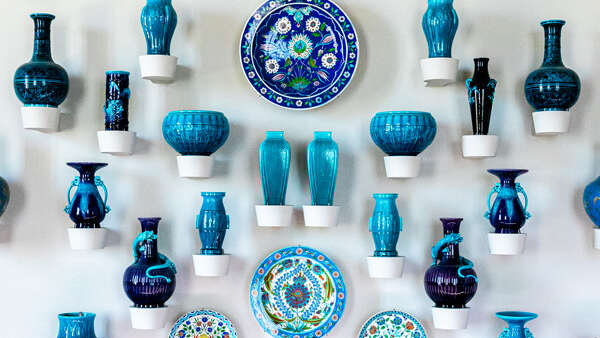




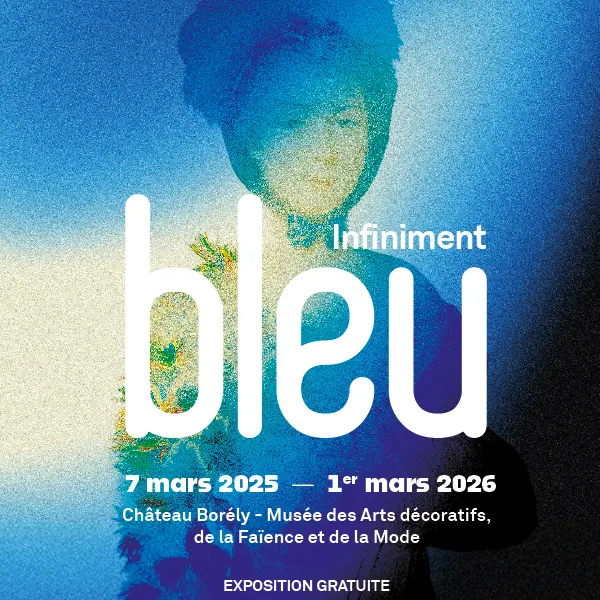
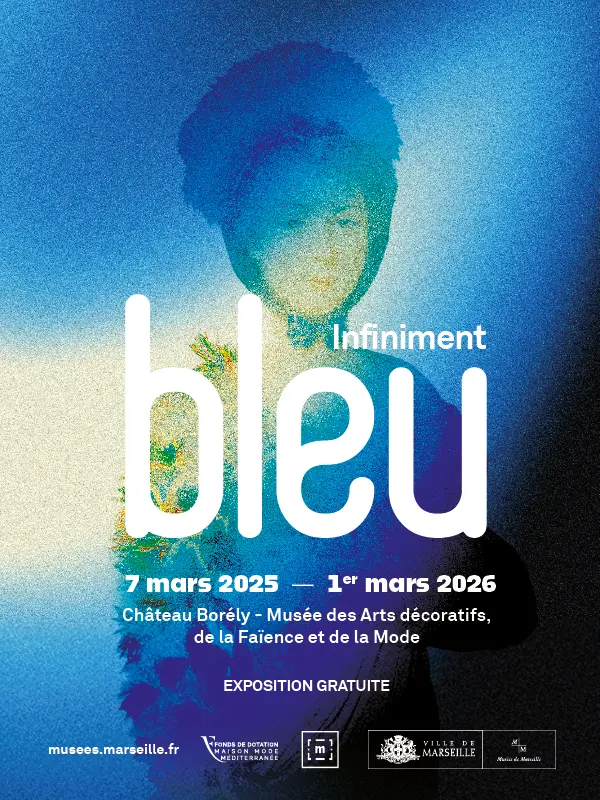
This focus evokes the importance of blue, from the 18th century to the present day, in the many fields where this color and its shades are essential: earthenware, graphic arts, jewelry and fashion.
The Musée Borély's new exhibition on the color blue features works from the Musée des Arts décoratifs, de la Faïence et de la Mode, from its permanent collections, some of which are rarely exhibited, as well as from the Musée Grobet-Labadié and the Musée des Beaux-Arts de Marseille.
This focus evokes the importance of blue, from the 18th century to the present day, in the many fields where this color and its shades are essential: earthenware, graphic arts, jewelry and fashion.
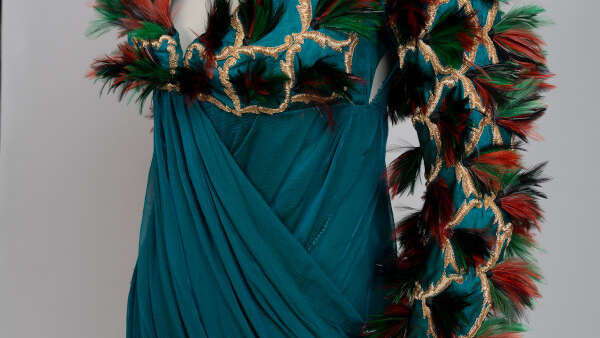
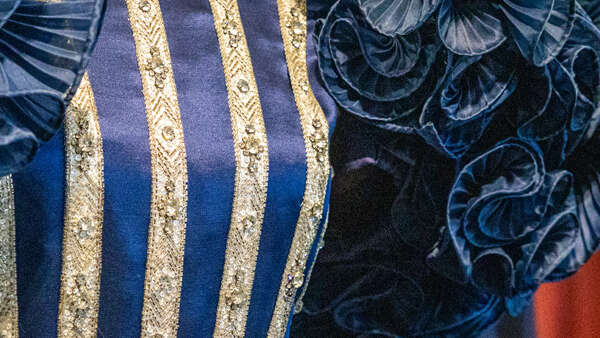
Echoing the infinite variety of blues in Haute Couture models from the museum's collections (Chanel, Schiaparelli, Lanvin, Courrèges, Alaïa, Cardin, Balenciaga, Guy Laroche, Azzaro...), presented in two phases for conservation reasons, recent creations by labels from Marseilles and the wider Mediterranean region, winners of the Fonds de Dotation Maison Mode Méditerranée, offer a particularly rich reading of this color, which remains inextricably linked to the shores of the sea and the history of the Mediterranean.
Through its representation in painting, the decorative arts, literature and clothing, the history of blue bears witness to the gradual change in mentalities and tells the story of an epic rich in symbols, issues and feelings. Degrading and secondary within an ancient system organized around three primordial colors: black, white and red, blue is often associated with death. Its return to favor in the 12th century came through the arts and clothing. Now a leading color, celestial blue became fashionable and the new red. Worn in all its shades, at court and in the city, blue triumphed in the Age of Enlightenment: a blue vogue accelerated by the gradual decline of European pastel production in favor of exotic indigo.
With the German Romantics, blue acquired a poetic dimension, becoming the color of love, melancholy and dreams. At the end of the 19th century, new artificial dyes replaced the old dye plants, while across the Atlantic, Oscar Levi Strauss gave birth to a soon-to-be iconic garment: blue jeans. Today, blue is said to be one of the three most worn colors in the Western world.
► To make sure you get the full tour of all our exhibition rooms, we invite you to contact the Museum before your visit.
► All tours and activities around the exhibition are available on the museums website
This focus evokes the importance of blue, from the 18th century to the present day, in the many fields where this color and its shades are essential: earthenware, graphic arts, jewelry and fashion.
Echoing the infinite variety of blues in Haute Couture models from the museum's collections (Chanel, Schiaparelli, Lanvin, Courrèges, Alaïa, Cardin, Balenciaga, Guy Laroche, Azzaro...), presented in two phases for conservation reasons, recent creations by labels from Marseilles and the wider Mediterranean region, winners of the Fonds de Dotation Maison Mode Méditerranée, offer a particularly rich reading of this color, which remains inextricably linked to the shores of the sea and the history of the Mediterranean.
Through its representation in painting, the decorative arts, literature and clothing, the history of blue bears witness to the gradual change in mentalities and tells the story of an epic rich in symbols, issues and feelings. Degrading and secondary within an ancient system organized around three primordial colors: black, white and red, blue is often associated with death. Its return to favor in the 12th century came through the arts and clothing. Now a leading color, celestial blue became fashionable and the new red. Worn in all its shades, at court and in the city, blue triumphed in the Age of Enlightenment: a blue vogue accelerated by the gradual decline of European pastel production in favor of exotic indigo.
With the German Romantics, blue acquired a poetic dimension, becoming the color of love, melancholy and dreams. At the end of the 19th century, new artificial dyes replaced the old dye plants, while across the Atlantic, Oscar Levi Strauss gave birth to a soon-to-be iconic garment: blue jeans. Today, blue is said to be one of the three most worn colors in the Western world.
► To make sure you get the full tour of all our exhibition rooms, we invite you to contact the Museum before your visit.
► All tours and activities around the exhibition are available on the museums website
Accessibility
Hearing disability
Mental disability
Visual disability
Accessible for self-propelled wheelchairs
Opening times
From 1 January 2026 until 1 March 2026
From 1 January 2026 until 1 March 2026
Monday
Closed
Tuesday
09:00 - 18:00
Wednesday
09:00 - 18:00
Thursday
09:00 - 18:00
Friday
09:00 - 18:00
Saturday
09:00 - 18:00
Sunday
09:00 - 18:00
Localisation
- musees.marseille.fr
Spoken languages
Spoken languages