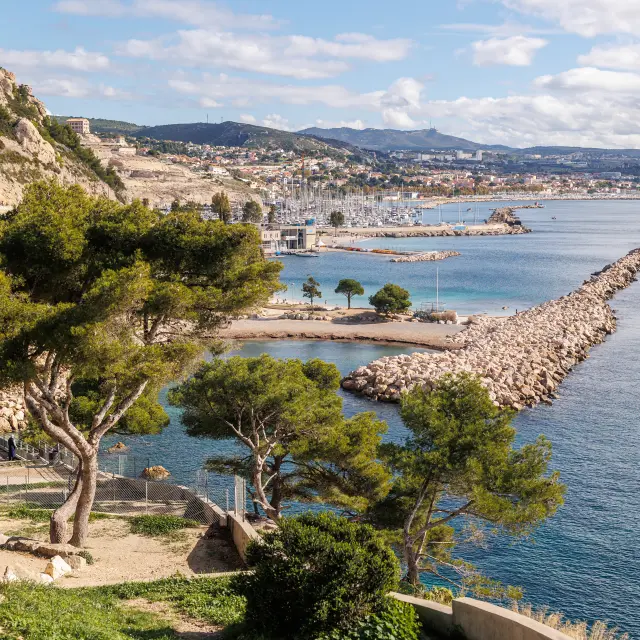
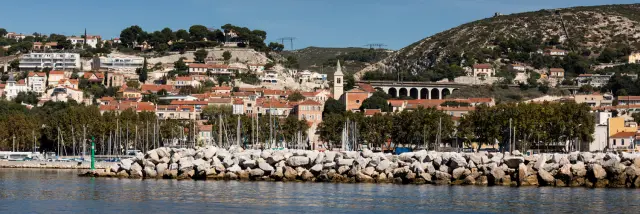
dyke and port of l'Estaque in Marseille

Estaque district

A bit of history

L’Estaque is one of Marseille’s many treasures: one ofthose 111 villages with such a distinctive identity. You often hear locals proclaim their love for their neighbourhood with this phrase: “We’re Estaquians before we’re Marseillais!”

Its name comes fromtheProvençalword “Estaco”, which means: the mooring, the stake used to tie up a boat. We are first and foremost in a fishing village founded in the 12th century with no means of transport to the centre of Marseille other than a mule track. It was not until the end of the 19th century that this peaceful village underwent a dramatic transformation withthe establishment of tile works to the east and factories to the west. The clay deposits were of exceptional quality, and tiles from L’Estaque were even exported as far as Mexico!

Whole families came to work in L’Estaque, mainly from the Italian Piedmont and Spain. These communities helped to create new neighbourhoods such as Les Riaux to the west, but also contributed to the emergence of a new type of workers’ housing: the ‘courée’. Fishermen, labourers, but also people from Marseille’s city centre who built a few ‘folies’ (extravagant summer homes): in the 19th century, L’Estaque also became aholidayresort.

A village of painters and colours

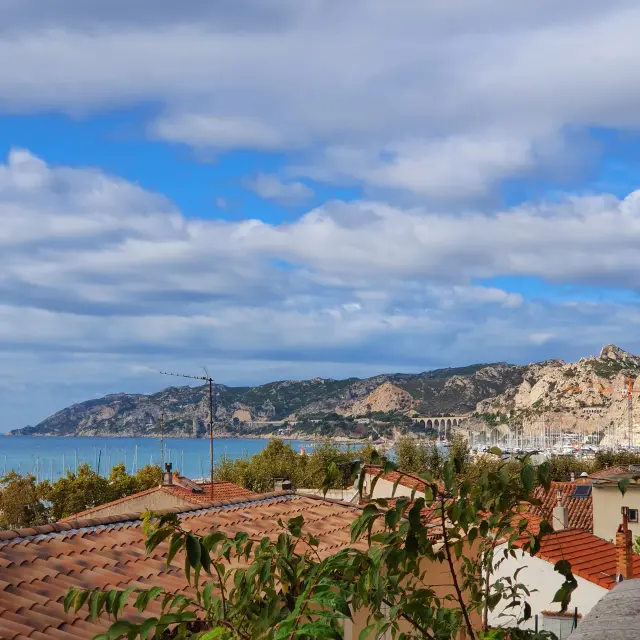
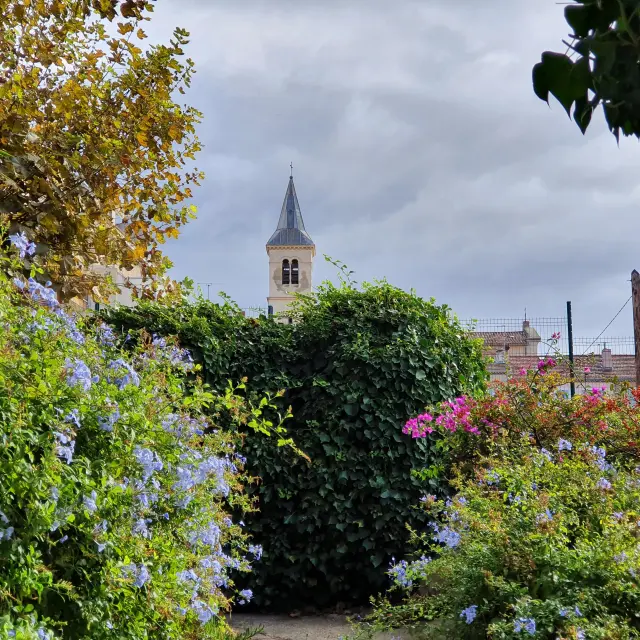
The heart of the village centres on Place Maleterre, where, right in front of the church, you’ll find the most beautiful view of Marseille harbour and the fabulous viaducts of the Côte Bleue railway line.

L’Estaque is also a source of inspiration for painters: Monticelli came to paint the Chapelle de la Galline, on the heights of L’Estaque, as early as 1860. From 1870 onwards, the famous Paul Cézanne explored shapes, lines and colours, paving the way for abstraction. Braque came to continue his artistic explorations in 1907, and it was in the Riaux district that he painted ‘La Maison à l’Estaque’, the first Cubist work, often overshadowed by Picasso’s ‘Les Demoiselles d’Avignon’.

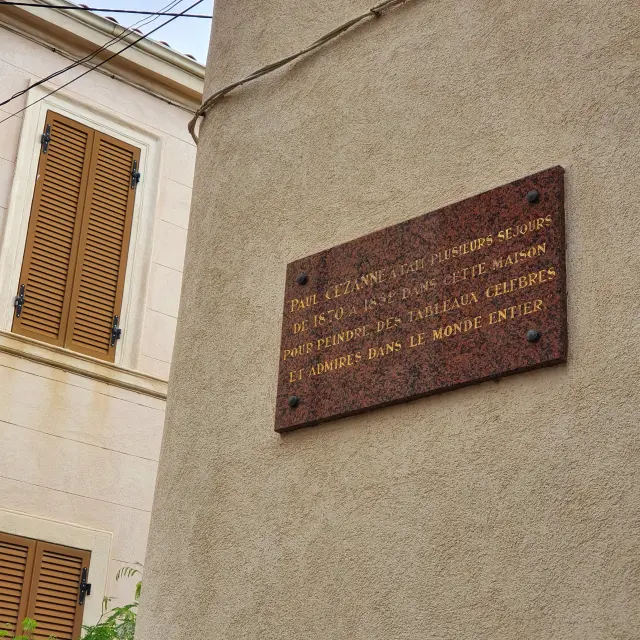
It was also here that Cézanne spent several periods devoted to the artistic explorations that would give rise to modern painting; indeed, there is now a commemorative plaque near Saint-Pierre Church.
Follow the Painters’ Trail on a walk lasting around two hours, which traces the great love affair between the picturesque neighbourhood of L’Estaque and the history of painting.

It’s like a playing card. Red rooftops against a blue sea

Cézanne to his friend, the painter Pissarro – 1876

Top 10 things to do in L’Estaque

1/ Stroll through the heart of the village following the ‘Estaque au cœur’ trail

2/ Enjoy the view from the viewpoint in front ofthe church of San Peiro de l’Estaco (in Provençal), from where you can see the rooftops of L’Estaque, the viaducts of the Côte Bleue and the harbour of Marseille

3/ Discover the few authentic establishments on Rue Martial Reynaud: the Pôle Chezanne art gallery, the Albert bar and its regulars, and l’Atelière, a second-hand clothes shop and dressmaker’s

4/ Enjoy some chichis for an afternoon snack or panisses as an aperitif at the harbour at Magali and Lou Goustado de l’Estaco

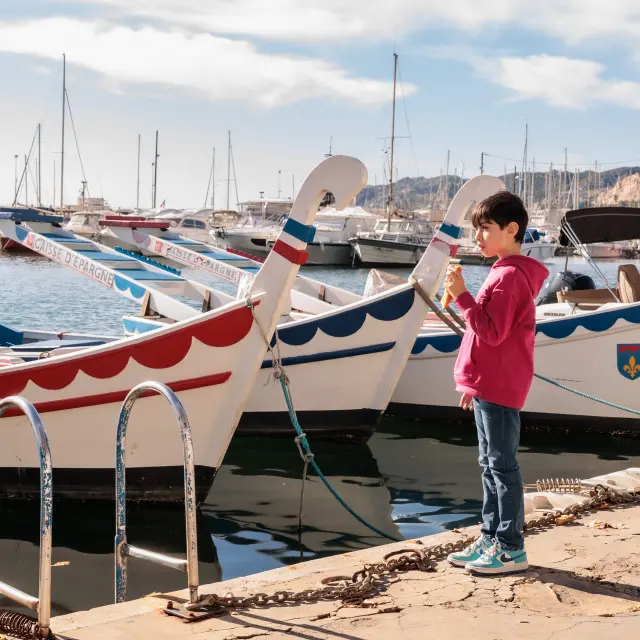
5/ Watch a jousting competition in the harbour basin with the Fine Lance Estaquéenne

6/ Enjoythe Mistral play area with the family – it’s equipped with children’s play equipment and is perfect for a post-meal stroll

7/ Cool off with a dip in the sea from the beaches of Corbières

8/ Buy some delicious Rove brousse cheese from the greengrocer ‘Fruits et Légumes Estaquéens’ at the start of Boulevard Roger Chieusse

9/ Relax withan aperitif and some panisses in the shade of the plane trees on one of the terraces overlooking the harbour

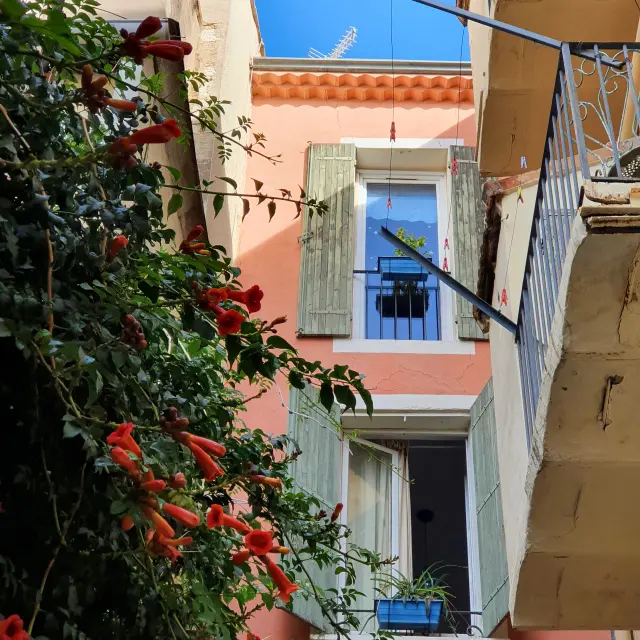
10/ Follow the ‘Unusual Architecture’ trail to discover the folies, bastides and courées of L’Estaque

Where to eat in L’Estaque?